May 312012
 

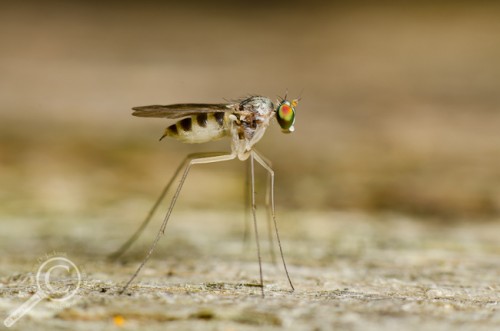
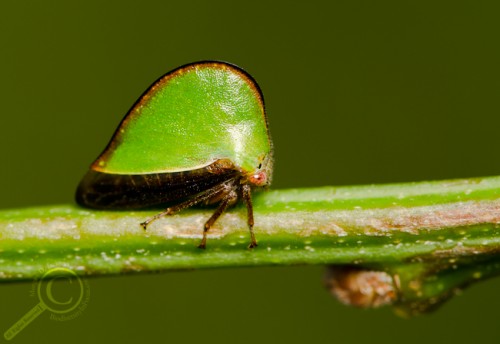
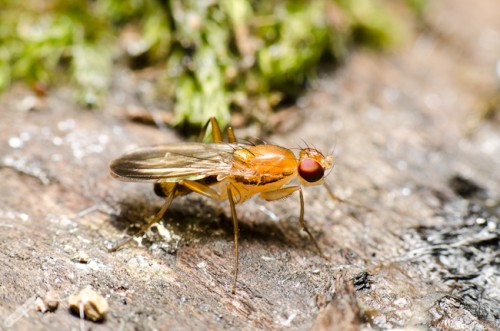
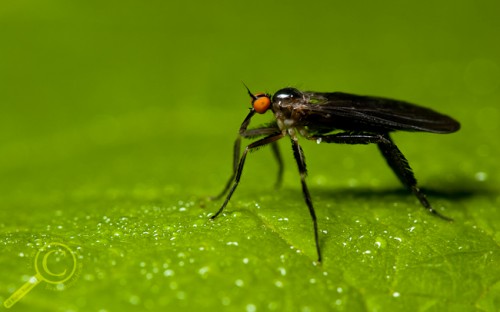
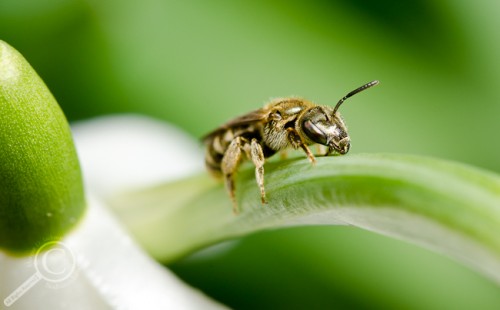
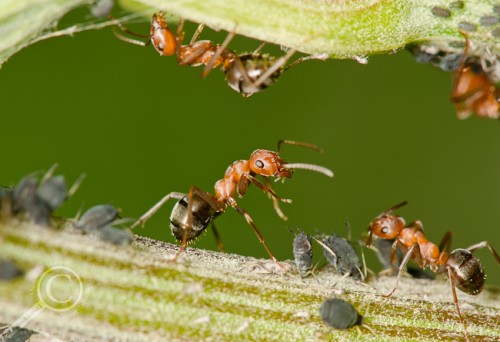
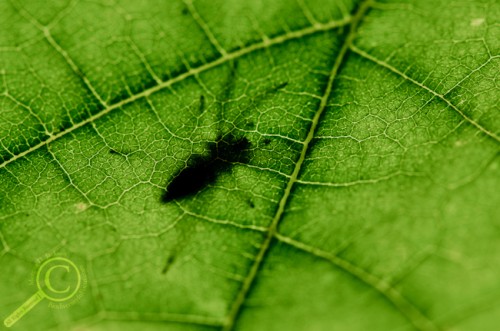
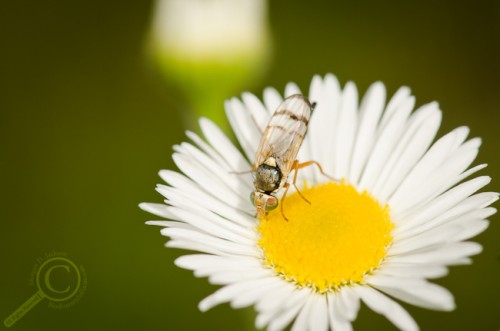
I’m applying for a student fee waiver for this summer’s BugShot Insect Photography Workshop, and spent today putting together my image portfolio. After some ruthless culling and extra time spent with edits, I’ve arrived at 10 photos which I feel best represent my insect photography. Going through my photo library was an enlightening experience, and I’m quite happy with the progress I’ve made since my first attempts at macrophotography 5 years ago. Of course there’s still plenty of room for improvement (hence my hopeful application to learn from the masters), and there are a number of different techniques and ideas I want to play around with, so I don’t see myself running out of subjects or projects anytime soon!

Click the images to view at a larger size (650px long edge).

May 272012
 

This has been a very busy week for insect news & science, and there are a ton of great things to keep you busy reading all weekend. First though, I need to get something a little broader but incredibly important off my chest.

Prime Minister Stephen Harper’s War on Environmental Science

I don’t normally wade into discussing politics because 1) I don’t follow it as closely as perhaps I should and, 2) it can be a pretty controversial topic which can get messy in a hurry. I don’t want to weigh this week’s flypaper down too much, but I feel compelled to share a number of deeply concerning developments in the Canadian government’s recent cuts to environmental research.

The Environmental Lakes Area, a world-class facility studying the affects humans and our products have on freshwater ecosystems, is being closed down.

If we’re not studying the affects of pollution on freshwater ecosystems, I guess we can still keep track of pollutants in marine environments. Wait, you mean that entire department has been cut as well? Oh. (As a slightly ironic aside, even the US media is picking this one up and questioning what the hell Canada is thinking)

Well, certainly our protected terrestrial environments will be studied and Canadian National Parks kept safe. No?! You have got to be kidding me. (It’s not only the natural history aspects of Parks Canada getting cut, it’s also our cultural history.)

Add to this the thousands of jobs cut across the Canadian Food Inspection Agency, Agriculture & Agri-Food Canada, Environment Canada, Public Health Agency of Canada and Health Canada, and it’s not hard to see that our current government views scientists & environmental research as an inconvenient truth (especially when they don’t tow the party line).

I’m incredibly proud to call Canada my home & native land, but am utterly ashamed of these “cost saving” measures being rapidly pushed through by the Conservative government. These short-sighted cuts will have long-lasting environmental ramifications well beyond the tenure of any political party’s leadership, will tarnish Canada’s reputation as an environmentally-friendly nation, and will hamper our ability to attract new minds to our universities, industries and governments. I have no doubt that in 10-15 years we will look back on this government and wonder “O Canada, what have you done?”

————

OK, that’s enough doom and gloom for one week. Now onto some bug links!

General Entomology

What would you classify angels as? If you said winged humans, you’re wrong. Clearly they’re insects. And in case you’re interested, the Taxonomy Fail Index for such a gaff is 122.3!

Tardigrades are pretty awesome, but this plush tardigrade by the Weird Bug Lady is way beyond cute!

Ani of Wanderer’s Eye documented the insect fauna of the Northwestern Ghats in India during last year’s monsoon season, and has put together an absolutely stunning e-book/slideshow. Amazing first step to documenting the insects of this poorly studied area; a must read!

Most people are familiar with entomopathogenic fungi in agricultural or tropical ecosystems, but what about in the Arctic? Chris Buddle explains why it’s important that we start learning about it soon.

Not shocking, but enlightening: city street lighting is changing the guild ecology of arthropods.

The Dragonfly Lady has 5 possible reasons why insects are so scarce in the ocean. I tend to follow the “Crustaceans were here first” line of thinking, but some of the other hypotheses are intriguing.

I’m not sure how I hadn’t heard of this project until now, but DrawWing aims to provide insect identifications via automated wing vein comparative analysis. Here’s some more info if you’re interested.

Diptera

It must be nearly summer, the stilt-legged flies are out and about again! Nice pictures of Rainieria antennaepes by Dave Stone at Things Biological.

Debbie Hadley at About.com Insects has a fun ID challenge this week. Think you can solve it?

How many flies are too many in a public bathroom? If you’re in Beijing, apparently 3…

One day I will make it to New Zealand and observe the caves of glow worms myself. Absolutely amazing spectacle, and something I can’t wait to see.

BugGuide.net is an awesome resource for North American insect lovers, and a big reason for that is the willingness of professional taxonomists like Terry Wheeler to contribute their time and knowledge to curating submitted images.

I suppose this great interview of Mohamed Noor is more about academia and evolutionary biology, but he uses fruit flies other than Drosophila/Sophophora melanogaster so I’ll leave it here in the fly files!

Hymenoptera

Bug Girl keeps the heat on the CCD-pesticide-bee health debate.

If you think all bees live in hives and produce honey, you’d best read this excellent primer on solitary bees by Africa Gomez at BugBlog.

Coleoptera

Ted MacRae has a touching tribute to Chuck Bellamy, a world-renowned expert in jewel beetle (Buprestidae) taxonomy, and the latest honorary member of the Coleopterists Society.

A genus of jewel beetles (Melanophila) have infra-red sensing organs more sensitive to forest fires than most man-made devices. Hot stuff!

Warning: this next link contains graphic images of beetles in compromising positions. What are they doing? You’ll just have to click to find out…

Lepidoptera

A lot is said about new digital cameras and their increasingly huge megapixel counts, but BunyipCo shows off the potential for entomology that a high megapixel camera can provide.

Arachnida

Earlier this year, major bank JP Morgan Chase suffered a multi-billion dollar financial meltdown, and it was just revealed that one of the leading causes was the chief executive being out of the office for significant amounts of time while she received treatment for Lyme Disease.

Another week, another stunning photo of a spider. This time by Rick Lieder at Bug Dreams.

Taxonomy/Biodiversity

This past Thursday was Carl Linnaeus’ 305 birthday, and the Biodiversity Heritage Library has a nice biography and a special download gift to help celebrate.

Natural history collections are a wealth of information, but sometimes that information comes in poorly appreciated packages. Like bottles of bird stomach contents cared for by an entomologist.

Other Fun Stuff

Scientific illustration meets comic book hero anatomy. Wicked anatomical drawing by Glendon Mellow.

So it turns out you can perform your own backyard DNA extraction using only the ingredients you’ll find in a strawberry daiquiri served in a soapy glass…

And now for a little etymological history. Ever wonder how those naughty little four letter words came into such infamy (or retreated from it)? Or why a question mark is squiggly while an exclamation mark is straight?

Finally, check out this great video about becoming a naturalist in your own backyard by the crew at Days Edge Productions. I loved every second of it!

Further Reading

Bora Zivkovic – The Scienceblogging Weekly

Ed Yong – Missing Links

May 172012
 

Yesterday, UK photographer Paul Bunyard (@wildaboutimages) ran into a massive mating swarm of chironomid midges (family Chironomidae) while travelling through the Norfolk countryside, and shared some amazing images on Twitter (reproduced here with his permission).

I'm at a location where flys have just hatched they are ... on Twitpic

Photo copyright Paul Bunyard & reproduced with his permission

Continue reading »

May 162012
 

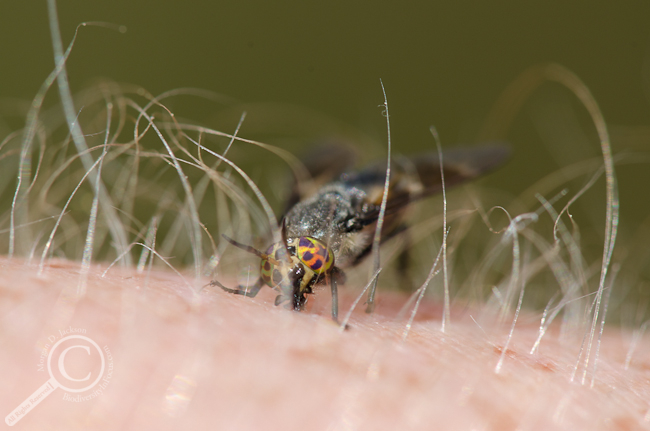
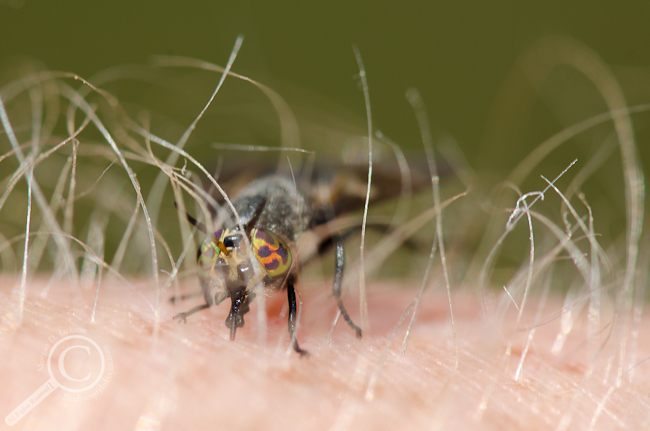
I went down to an inland dune habitat in Southwestern Ontario yesterday with my lab mates to do some collecting. For the most part insects were pretty scarce to come by, except for the biting flies, which were out in abundance.

Chrysops cuclux tasting

Chrysops cuclux making sure I will taste just right

Thankfully this was the only deer fly (family Tabanidae) that I had the misfortune of waiting on. I initially went to brush it off, but when I noticed it was oriented in such a way that I could snag a photo, I bit the bullet and allowed it to continue while I contorted my camera around to document another happy customer.

Chrysops cuclux tasting

It's true; the first cut is the deepest

Unlike mosquitoes, who’s mouthparts act like a hypodermic needle to stealthily imbibe your blood, deer flies cut and slice the skin, causing bloodshed which they then lap up. Much like a skinned knee is usually more painful than the prick of a phlebotomist, a bite from a deer fly will rarely go unnoticed, and in this case, make it all the more difficult to photograph whilst squirming!


——————–

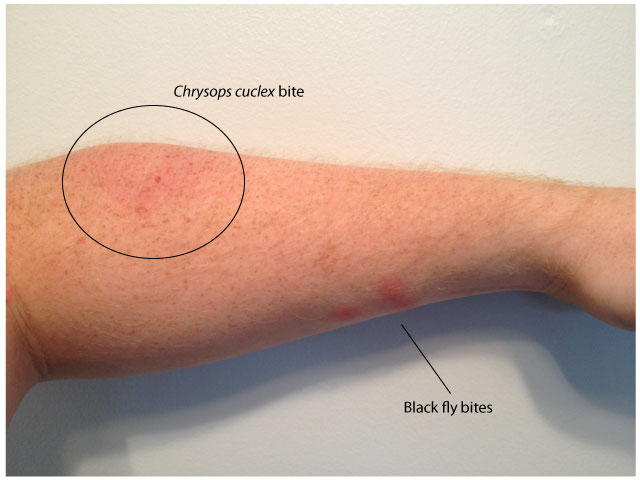
If you’re curious, here’s a shot of my arm this morning, about 18 hours after the bite occurred. There was a swollen welt about 1″ in diameter that was quite firm and which occasionally had a strange tingling sensation, yet wasn’t itchy. Things seem to be back to normal 36 hours after the bite, with only a small firm area directly below the bite.

Chrysops cuclux bite after 18hrs

Chrysops cuclux bite after 18hrs, with black fly bites for comparison

——————–

If you’ve had a run in with a deer fly before and are curious what species it might have been, check out CJAI #8 (The Chrysopinae of Canada East of the Rocky Mountains) or Tesky’s hand book to the Tabanidae of Canada.

May 122012
 

I come across a large number of interesting blog posts, news articles, scientific papers and various other types of media every week, which I try and share through Twitter on a regular basis. Since I know not everyone has been bitten by the Twitter bug yet1, I figured I’d start a weekly round up of links to some of the stories I find interesting, important or just plain entertaining.

True to form, most of these links will be insect related, but I have broad interests, so some other topics are sure to turn up from time to time2. The internet is full of talented people, and I hope you enjoy their work as much as I have.


The Flies (Diptera)

The 8th International Congress of Dipterology is coming up in a few years, so be sure to start saving your pennies for the trip to Potsdam, Germany!

I prefer studying flies (dead or alive), but if that’s not your thing, check out these creative photos of dead house flies and blow flies having the times of their (already finished) lives. Here’s the full collection by photographer Nicholas Hendrickx.

The BugBlog has a nice series of photos of Helophilus pendulus, commonly called the Footballer Hoverfly in the UK. Why call it that, you might ask? Apparently the striped patterns on the thorax reminded someone of a soccer jersey.

The Dragonfly Lady shows off a nice hilltopping site in Arizona. Plenty of fly talk in the comments.

The Beetles (Coleoptera)

The Edmonton Journal has a great biography of Dr. George Ball, a beetle taxonomist at the University of Alberta who has impacted the careers of dozens of top entomologists across North America.

This short film is both beautiful and bizarre all at once. A stop-motion portrayal of the life of a beetle taxonomist who makes the discovery of a lifetime.

Emerald Ash Borer (Agrilus planipennis) has now been found in most major urban centres across Ontario, and has recently turned up in Quebec. Chris Buddle discusses the affect that EAB will have on Montreal.

While not EAB, Chrysobothris vivida looks quite similar on first glance. The Field Museum shows off the holotype and label data, helping to explain the role that natural history collections play in day to day science.

Speaking of natural history collections, a volunteer at the Natural History Museum in London, England shares why she loves helping out with the beetle collection in her spare time.

Check out this awesome longhorn beetle (Cerambycidae) Ted McRae of Beetles in the Bush came across while working in Argentina recently. While you’re there, share your ideas on the purpose of the strange tufts of hair!

The Ants, Bees, and Wasps (Hymenoptera)

The School of Ants is gearing up for another summer of discovery by sampling the ants around our houses and picnic areas.

Ants are to ________ as clown fish are to anemones. Think you know the answer? Better check Not Exactly Rocket Science (NERS) by Ed Yong for an excellent tale of commensalism.

It may not be 1984, but Big Brother is watching what Orchid Bees are up to (but don’t worry, it’s for a good reason).

Scientific American ran an interesting story about native bee populations in eastern North America, and included an excellent slideshow of some beautiful bees with it.

Some of photos in that slideshow came out of the Packer Bee Lab at York University, as did a newly published review and key to the Dufourea bees (Halictidae) of Canada in the Canadian Journal of Arthropod Identification.

Other Arthropods

Marine water striders (Gerridae) are making the news this week with the release of a new study finding that a massive raft of plastic pollution in the Pacific is harboring a growing population of these bugs. Ed Yong is excellent again on his NERS blog, and the paper is Open Access if you’d like to take a look yourself.

These plastic-loving water striders aren’t the only insects that have taken to the open ocean, and the North Carolina State University Insect Collection has a few more examples to share.

Caterpillars come in a wide variety of colours, shapes and forms, but these translucent, jelly Jewel Caterpillars are some of the most beautiful!

I saw Avengers this week, and it was really, really good. Prior to the movie, there was a trailer for the upcoming Spiderman reboot, promising plenty of web-slinging action. Before the movie comes out this summer, meet the backyard spider that may have served as inspiration for Peter Parker’s gadgets.

Taxonomy, Biodiversity, Academia, Science Communication/Photography

Although written by a marine ecologist and discussing a paper about plant taxonomists, this post on the Sea Monster Blog is one of the most best stories about the role of taxonomy and the decrease in taxonomists being hired and funded. A must read for anyone who depends on biology in their day-to-day lives (that means you).

The NCSU group shares an entertaining story and asks you to decide whether it’s fact or fiction. What do you think?

The Tepuis of Brazil are way up on the list of places I want to explore and collect one day. This excellent New York Times article by Carl Zimmer makes me want to go even more.

A new project was launched this week which hopes to provide interactive range maps for all the worlds flora & fauna! Nature has a nice feature explaining some of the goals and obstacles the project faces in the early phases. Right now they only have terrestrial vertebrates and North American freshwater fish mapped, but the interface is excellent and has a lot of potential! Now to get some insects into the project…

Most research papers only discuss results and experiments that worked. The Canadian Field Naturalists Blog discusses the importance of publishing projects which didn’t work as expected.

Just because it’s summer vacation for undergraduate university students, doesn’t mean their professors get a break too. Chris Buddle outlines some of his labs plans for the summer.

To get a job in academia, your peers (and more importantly, your hiring committees) need to know you and your work. But is all self-promotion viewed equally? Excellent discussion on the evolving role of social media and blogging to the world of academia by Scicurious.

Photography & Other Fun Stuff

Have you ever wondered what it’d be like to be a press photographer tasked with covering President Obama? This account by a Reuters photographer shows just how stressful the assignment can be.

I don’t know who started it, but the #InsectSongs suggested by Twitter users this week was an afternoon of hilarity. Check out some of my favourites, and then see which ones Bug Girl selected.

Finally, enjoy this fun stop-motion video detailing the everyday lives of insects.

————————

1- If you need more convincing why you should sign up for Twitter, here’s another excellent piece on the benefits of Twitter for academics

2- Ed Yong, and Bora Zivkovic do extensive weekly link round-ups covering a very broad spectrum of science writing if you need something else to read this weekend!

Apr 202012
 
Willi Hennig - The Father of Modern Phylogenetic Systematics

Willi Hennig (Image by Gerd Hennig, CC-license, Wikipedia)

The science of taxonomy is rooted in history, with every taxonomist standing on the shoulders of giants that came before. Some of these giants are well known outside of taxonomic circles: Carl Linnaeus, the godfather of taxonomy who categorized life and introduced binomial nomenclature; Charles Darwin & Alfred Russel Wallace, co-discovers of evolution through natural selection and both prolific descriptive taxonomists in their own right. A lesser known giant, Willi Hennig, was not only a brilliant taxonomist, but also revolutionized the way in which we study & reconstruct species relationships. Today (April 20, 2012) marks what would have been his 99th birthday, and in his honour, I invite you to sit back and allow me to tell you a story of flies, war and why you & I are fish.

Willi Hennig was born April 20, 1913, the eldest son of working class parents, in Dürrhennersdorf, Germany. Hennig excelled throughout his schooling, developing a passion for insects by the 5th grade, and began working at the Dresden State Museum of Natural History while still a teenager. After a few years studying the taxonomy of reptiles, Hennig found his true passion, dipterology. Starting somewhere between 1932 and 1934, Hennig began revising the stilt-legged flies (family Micropezidae), completing his revision in 1936. Hennig erected 10 new genera and described 93 new species over several papers spanning 300+ pages. Concurrently, Hennig found time to publish papers on stilt-legged fly biogeography, more reptile taxonomy, and he also completed his PhD (on the copulation apparatus and system of the Tanypezidae; another lineage of acalyptrate flies), all before he was 24.
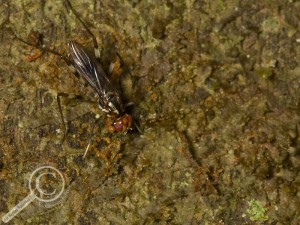
Poecilotylus species eating off a tree trunk in Bolivia Micropezidae

This stilt-legged fly belongs in the genus Poecilotylus, one of the genera Hennig created in his early Micropezidae work.

Hennig was beginning to rethink how species were related, but before he could further explore his ideas, German politics and a world at war intervened.

Enlisted into the German army in 1938, Hennig fought for Nazi Germany (though he was never a member of the National Socialist party) until 1942 when he was severely injured while fighting in Russia. After recovering from his injuries, Hennig was posted to Italy as a military entomologist and put to work on malaria prevention. In May of 1945, as the war was nearing an end, Hennig’s unit was captured by British soldiers, and he became a prisoner of war. His British captors recognized Hennig’s potential, and rather than placing him under confinement in a prison camp, allowed him to continue his work on malaria for the benefit of the Queen.

For 5 months while confined to the “service” of the British army, Hennig refined his hypotheses on the evolutionary history of species. With the help of his wife Irma, who corresponded with colleagues and journals on his behalf (because he continued to publish throughout the war), and who included hand-written excerpts of the scientific literature in her letters to him, Hennig completed his first draft of one of the most important biological manuscripts of the 20th century, all by hand while a POW, prior to his release in October, 1945. It would be another 5 years until his book would be published in Germany because of a paper shortage, and a further 16 years until the English-speaking world was introduced to Willi Hennig’s revolutionary Phylogenetic Systematics.

Prior to Hennig’s book, species (and higher taxa) were clustered by overall similarity without regard for their evolutionary history, a method known as phenetics. What set Hennig’s phylogenetic systematics apart was the idea that species evolved from one another, and thus species should be classified as complete units descended from a recent common ancestor (a concept known as monophyly).
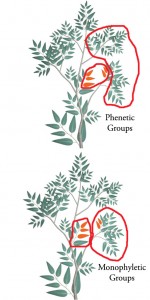
Phenetics vs Cladistics

Phenetics vs Monophyly (Modified image from lattice CC-BY)

Think of a tree; with phenetics, leaves from different branches could be grouped together because they looked the most similar to one another. Phylogenetic systematics on the other hand, posited that only leaves arising from a shared branch should be classified together, regardless of how those leaves may look. How do you know the origin of the branch when all you have in front of you are the leaves? Hennig’s answer was to find defining characters or traits that were unique to the tip branches but which were different from the branches closer to the trunk of the tree.

It’s Hennig’s concept of monophyly that makes us all fish. You see, what we call fish, tasty aquatic vertebrates with fins and gills, are actually a number of different evolutionary lineages, each arising successively like twigs off a tree branch. One of those twigs near the end of the branch became the terrestrial vertebrates, which in turn has smaller twigs each representing amphibians, reptiles, birds (which are actually reptiles for the same reason we’re fish) and mammals. So, if we consider separate twigs of aquatic, gilled vertebrates as “fish”, then we must also consider our twig of terrestrial vertebrates “fish” since the most recent, common ancestor of all the “fish” also gave rise to us!
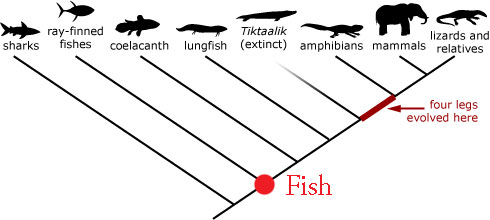
Fish Phylogeny

Fish Phylogeny (Image modified from Understanding Evolution)

In retrospect it seems a simple idea that species should follow a branching pattern from a common ancestor like Hennig proposed, but the upheaval of decades of work on species relationships was indeed revolutionary, and was viciously opposed by many biologists. In fact it wasn’t until the late 1980s that phylogenetic systematics came into vogue, in most part thanks to a new, young cohort of taxonomists who adopted the moniker of “raving cladists”.

Hennig meanwhile, continuing his work with flies, applied his phylogenetic systematics across a large diversity of dipteran families, examined flies sealed in ancient amber for evidence of ancestral characters, and published dozens of papers (across thousands of pages) that redefined the higher relationships among flies and described new species. It was at work in his museum that Hennig preferred, only twice venturing from Germany to examine fly collections in Australia, the USA, and Canada, where he spent several months working in what is now the Diptera Unit of the Canadian National Collection of Insects in Ottawa.

Oh, to be a fly on the wall in this room for the day! Back row from left: Frank McAlpine, Herb Teskey, Guy Shewell. Front row from left: Monty Wood, Dick Vockeroth, Bobbie Peterson, Willi Hennig.

Oh, to be a fly on the wall in this room for a day! So much dipterological knowledge all concentrated in one room, it must have been amazing. Back row from left: Frank McAlpine, Herb Teskey, Guy Shewell. Front row from left: Monty Wood, Dick Vockeroth, Bobbie Peterson, Willi Hennig. (Image from Cumming et al, 2011)

Willi Hennig wouldn’t survive to see his work become fully appreciated by the scientific community. After a normal day working in his museum looking at larval flies, Willi Hennig suffered a heart attack and died at home on November 5, 1976. Although he died much too young, his legacy lives on; his work with stilt-legged flies is second to none, many of his hypotheses regarding the higher relationships of flies are being supported with new DNA data, and biologists around the world use phylogenetic systematics on a daily basis.

Happy Birthday Willi, and thanks for all the fish.

Willi Hennig (Image by Gerd Hennig, CC, Wikipedia)


———————————-

All biographical information was taken from the following sources:

Byers, George W. 1977. In Memoriam: Willi Hennig (1913-1976). Journal of the Kansas Entomological Society, 50 (2): 272-274. http://www.jstor.org/stable/25082934?origin=JSTOR-pdf

Kluge, Arnold G., Bernd Hennig. No Date. Willi Hennig. Willi Hennig Society – http://cladistics.org/about/hennig

Schmitt, M. 2003. Willi Hennig and the Rise of Cladistics. Proceedings of the 18th International Congress of Zoology: 369-379.

Dipterist Group Photo:

Cumming, Jeffrey M., Bradley J. Sinclair, Scott E. Brooks, James E. O’Hara, Jeffrey H. Skevington. 2011. The history of dipterology at the Canadian National Collection of Insects, with special reference to the Manual of Nearctic Diptera. Canadian Entomologist 143: 539-577.

sciseekclaimtoken-4f850e14c19e1

They’re Alive!!!

 Biology, Entomology, Photography  Comments Off on They’re Alive!!!
Apr 192012
 

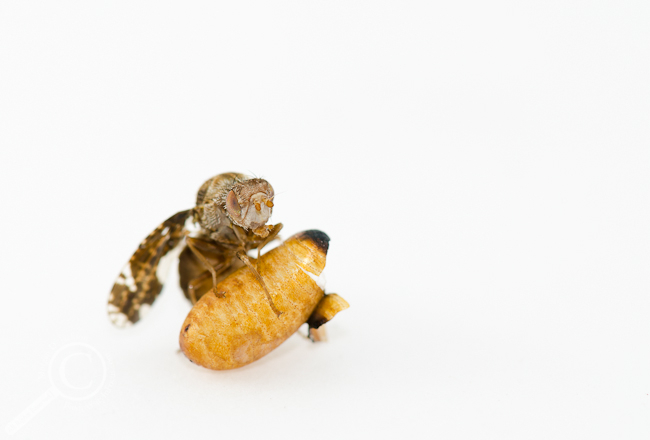
After overwintering in a Ziploc bag stored in my barbecue, I was excited to see the first of my Eurosta solidaginis fruit flies (Tephritidae) had emerged from its puparium this morning! This was my first attempt at rearing Goldenrod Gall Flies, so I wasn’t sure what sort of success I was going to have, but so far, so good. Now to wait and see if I get any surprises!

Triumphant Eurosta solidaginis Tephritidae Goldenrod Gall Fly

Eurosta solidaginis (Tephritidae), the Goldenrod Gall Fly

Apr 182012
 

Another week, another Monday night blog challenge from the Bug Geek! Your challenge, should you choose to accept it, is explain your research in 250 words or less in a way that a 10-year-old could understand. Instead of banging my head against the wall on a manuscript (see earlier challenge) I tried my hand at explaining Diptera taxonomy.

What do I do for a living? I collect bugs! Not just any bugs though; I like to catch flies from around the world, bring them back to my laboratory, and figure out what their names are. Just like your parents gave you a name that’s special to you, scientists like me have given names to a lot of the flies around us. Many flies have long complicated names, like Drosophila melanogaster or Taeniaptera trivittata, but these names tell us who the fly is related to, just like your name.

Sometimes when I’m out collecting flies, I find one that has never been seen by a scientist before. That’s when my job gets really exciting, because I get to give that fly a new name! I can name a fly because of how it looks or how it lives, but sometimes I name the fly after someone important. As long as I know who it’s related to, I have lots of flexibility in naming!

There is so much about flies that we don’t know, which means plenty for me to learn.  Most people think you need to travel to faraway jungles to find something exciting, but there are amazing new discoveries waiting for you in your own backyard. There may even be a new fly waiting to be discovered! Learning about flies at home and abroad helps us understand how they live their lives and why they look the way they do.

Not really knowing any 10-year-old children, I hope my explanation isn’t too simplified (I think it’d be ok for my 7-year-old nephew though). Clearly I didn’t really get into the other aspects of my job, like phylogenetics, systematics and disseminating biodiversity knowledge through identification aids (and blogging of course). While I think I could do it, these topics would need another 250 words, and it was already 2am when I finished this bit…

This was a great challenge, and has applications far beyond inquisitive school children. I have family and friends ask what I do and why it matters fairly frequently, and in the past I’ve sometimes felt self-conscious trying to explain it (but that’s a much larger topic for another day). After this exercise, I think I’ve got a few new tricks up my sleeve for the next family reunion!

Toxomerus marginatus Syrphidae on flower

Toxomerus marginatus

Apr 112012
 

Urophora affinis Tephritidae Fruit Fly


Urophora affinis, a fruit fly in the family Tephritidae, was introduced to Ontario in the 1970’s as a biological control agent for invasive European knapweeds. When the researchers went back to check on the population a few years later, they were unable to find the species again, and concluded that the population failed to become established (at least in Ontario, a similar introduction in British Columbia did survive).

Fast forward to 2008 when Adam Brunke (a beetle specialist, ironically) collected a specimen in his parent’s backyard, nearly 200 kilometers away from the original introduction site! Clearly Urophora affinis had not only survived, but had even managed to expand it’s range across a large portion of central Ontario, a story which I reported in my paper on Ontario Tephritidae last spring.

Later on in the summer, I accompanied Adam and Steve Paiero (of tongue parasite fame) out to Northumberland County (much closer to the original introduction site) where they were conducting a survey, and happened to find a thriving population of Urophoa affinis in a nice sunny clearing. Nearly every composite flower had an individual or two on top feeding and/or mating, and we collected a long series to place in the University of Guelph Insect Collection. I also walked away with a number of nice photos documenting the species in a new location.

It just goes to show that a species can find a way to survive and prosper, even if they go unnoticed by us!

sciseekclaimtoken-4f850e14c19e1
Feb 282012
 

Over the past 250 years, hundreds of thousands of flies have been described and given names by taxonomists from around the world. Many of these names have stood the test of time and are still in use today (the common house fly Musca domestica was named by Carl Linneaus in 1758, for example), but many names did not make the cut; sometimes because the species they were assigned to already had names from earlier scientists, sometimes because the name was being used for another animal, and sometimes because we gained a better understanding for how species are related and moved them to a new branch on the tree of life. These synonymous names remain important to us though, and can’t just be discarded or forgotten about, as sometimes they get a second chance at fame following the discovery of new specimens or new characters! Managing all of these names, searching for obscure papers published at any point in the last 250 years and knowing every little detail about a species’ scientific heritage is what keeps taxonomists busy from day to day. Taxonomists are modern day treasure hunters, following maps laid out by our taxonomic forefathers and searching for hidden gems in new & undescribed species.

Traditionally, species names have been tracked in small batches during the course of taxonomic revisions, being updated once a generation or two if we’re lucky. For decades, taxonomy has been underfunded, understaffed and unappreciated, meaning even these small revisions are being done less and less frequently, and by fewer people each generation. This has lead to a situation that has been termed the Taxonomic Impediment. Put simply, there are too many unknown species and not enough time, money or scientists to describe them, with many species disappearing before we even realized they were there.

In the internet age, taxonomists can communicate, collaborate, and compile their expertise into larger ideas and bigger projects. By working together, taxonomists today have begun consolidating tools in open access resources available to the community at large, and more importantly, the public. One such resource is Systema Dipterorum, a clearing house for fly names and taxonomic information. This library of fly taxonomy has been an ongoing project for the past 20 years, originally spearheaded by Dr. F. Christian Thompson, a veteran fly taxonomist and one of the world’s foremost experts on flower flies (Syrphidae). With the help of dipterists from around the world, and the support of Dr. Thomas Pape and the Natural History Museum of Denmark where the online database has been stored for the past few years, this database of fly names has grown to include more than 160,000 species, for which 250,000 different names have been found, recorded and made available in the database (as reported in FlyTimes Issue 46, 2011), along with authors and citations for when those names were first published.

Systema Dipterorum is a shining example of what a taxonomic community can accomplish, even with the limited financial resources provided to it. Other groups have similar resources (see AntWeb.org for the photographic equivalent for Formicidae) but I regard the Diptera community’s combined efforts as one of the greatest accumulations of taxonomic information anywhere. I use this database weekly during the course of my own taxonomic revisions, but I also consult it for my personal endeavors in order to use the most accurate names in my photography and scientific communication, as well as to satisfy my curiosity.

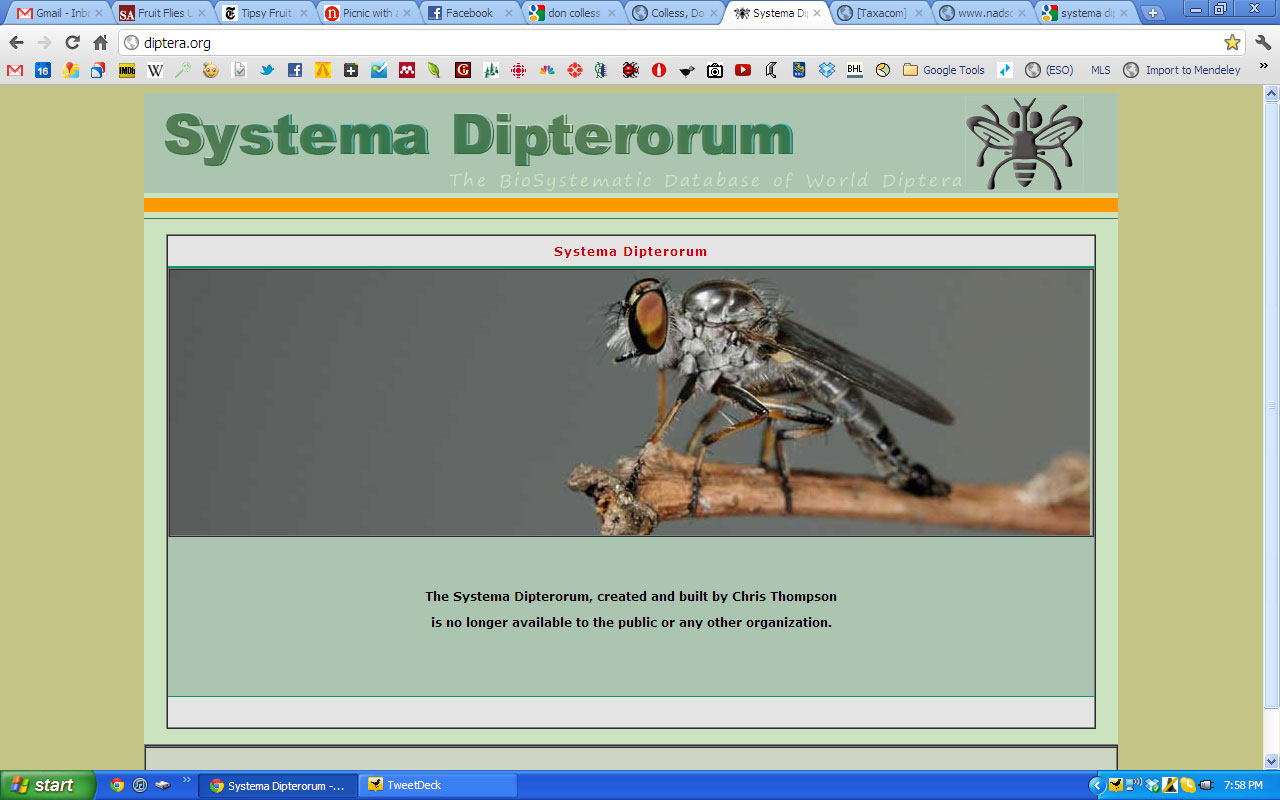
I also use the database to explore the works of other dipterists, to learn what they are passionate about, and to better understand the work being undertaken around the world. To that regard, I visited diptera.org on February 16 to learn more about the work of Australian dipterist Don Colless, who recently passed away. Instead of a world-leading database, I found this:

Home page for Systema Dipterorum as of February 16 2011

Home page for Systema Dipterorum as of February 16, 2011 (click to enlarge)


What made this unsettling discovery even more surprising was Dr. Thompson’s recent commitment to developing the database despite a recent funding cut! Along with Dr. Thompson’s efforts to develop Systema Dipterorum, many from the community have also contributed to the database. Closure of the database is a slap in the face to all who have taken the time to contribute, and a major setback for dipterists everywhere.

Dr. Thompson has said his decision to close Systema Dipterorum was made by the funding cut, but also because he believes he is being forced out of his emeritus position at the Smithsonian Institute in Washington (where he’s been employed for decades). Regardless, Systema Dipterorum should not be used as a negotiating tool, and restricting access holds the entire Diptera community hostage. Hopefully Dr. Thompson and his colleagues will consider officially making the database the property of the global Dipterology community and not remove it, or threaten to remove it again.

As of February 21, Systema Dipterorum has been placed back online, although there appear to be coding issues, with error messages appearing in place of search results, resulting in the system remaining inoperable. Hopefully these kinks will be worked out quickly, restoring Systema Dipterorum to a fully functional state. I can only imagine that administrative abilities and over-arching control strategies will be reexamined after this incident, and safeguards will likely be enacted to prevent a similar situation from occurring again.

The long term future of Systema Dipterorum is anything but assured however. The continual development of this resource will rely on stable funding being available for not only its basic day to day maintenance, but more importantly the continued job of growing the database through the addition of names and taxonomic information. Perhaps it’s time for the international Diptera community to move from an informal association of like-minded individuals (like those found in the North American Dipterists Society or the Diptera.info community) towards a more formal society, complete with an elected governing board, constitution and devoted, voting membership. We’re not far from such a society; the North American Dipterists Society meets biannually, while an International Congress of Dipterology is held every four years, and dipterists have taken to Facebook and other social media to facilitate communication between formal gatherings. I’m sure that establishing an international society can be a delicate endeavor, but what better time than the present to begin the process, promote international collaboration and encourage prospective dipterists from around the world to become involved in a global initiative? An International Society of Dipterists could then be made stewards of Systema Dipterorum, helping to ensure its continued development by research groups and enthusiastic specialists as a leading mandate for the society.

There have been major strides made by the Diptera community to advance not only our knowledge of fly diversity and taxonomy, but also to advance the profile of taxonomists in general. In an age where taxonomists are becoming endangered species, it’s imperative that we band together and remind funding agencies, universities and governments about the vital role the science of taxonomy plays in all aspects of biology, and encourage these institutions to return to investing in the training, employment and funding of taxonomists, before the Taxonomic Impediment becomes the Taxonomic Impoverishment.


UPDATE March 5, 2012: It seems Systema Dipterorum is fully functional again. Go find taxonomic info while you can people!