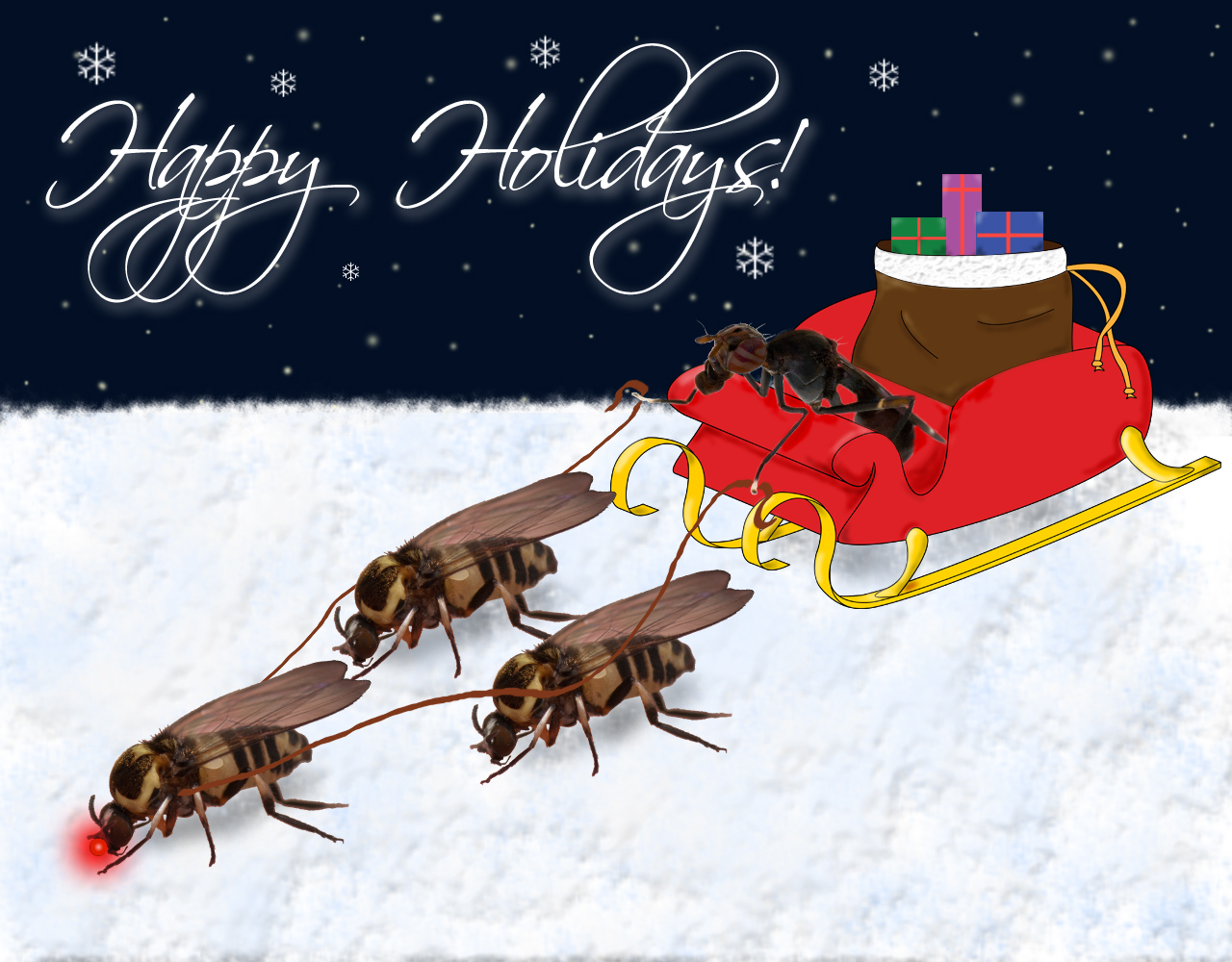
Lately I’ve showcased a number of scientific papers that I’ve dubbed “Cool Science”; today is no exception, except this paper is cool for what should be all the wrong reasons. But let me start at the beginning.
Jan 202011


Lately I’ve showcased a number of scientific papers that I’ve dubbed “Cool Science”; today is no exception, except this paper is cool for what should be all the wrong reasons. But let me start at the beginning.
As they say, better late than never, but man, this one is really late. The annual general meeting of the Entomological Society of Ontario was held October 15-17 2010 and as usual, it was a great meeting!
I look forward to the ESO meeting every fall, as it gives me a chance to catch up with other grad students from around the province, learn something new, and become inspired going into the dark winter months! The diversity of entomological graduate research being done throughout Ontario never ceases to amaze me, with students presenting on topics ranging from agricultural pest control to freeze-tolerance biology, and from taxonomy to forest ecology, representing 6 Ontario universities. I’ll come back to the student talks a little later, but they were certainly one of the highlights.
Before the official start of the meeting, I attended my first board meeting for the Society as the new webmaster. This was quite the experience, and provided my first look into the inner workings of how things get done in academia. Plenty of lively debate and many great ideas for the future of the society made the 5 hour meeting a breeze!
Following the board meeting was the obligatory ESO Mixer, a chance for students and researchers to meet, greet, and enjoy a beverage or two before the meeting gets underway!
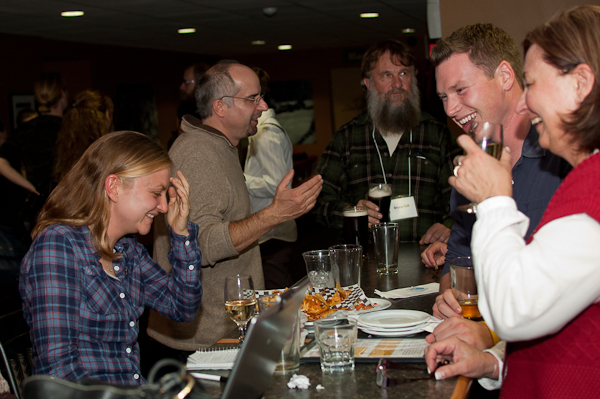
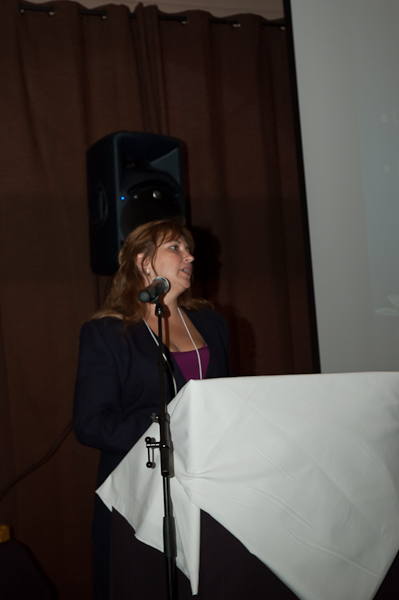
The next morning started with the plenary session, featuring talks by Dr. Sherah VanLaerhoven of the University of Windsor and Dr. Amanda Moehring from the University of Western Ontario. Dr. VanLaerhoven is a forensic entomologist, making this the second time this year I’ve been faced with graphic imagery from depressing stories less than an hour after breakfast. Sherah related her work on the Steven Truscott case, and this being a scientific conference, held nothing back about the case, displaying actual crime scene and autopsy photos while explaining the significance of the entomological evidence gathered by the coroner. It’s hard to remain objective and detached when shown photos of an abused and murdered young girl, and I commend all those in law enforcement who deal with these sights in person; it’s certainly not a job that I could do. The mood was considerably lightened by Dr. Moehring’s talk on sex and genetics in Drosophila, and everyone was well prepared for the beginning of the student talks following her energetic presentation.
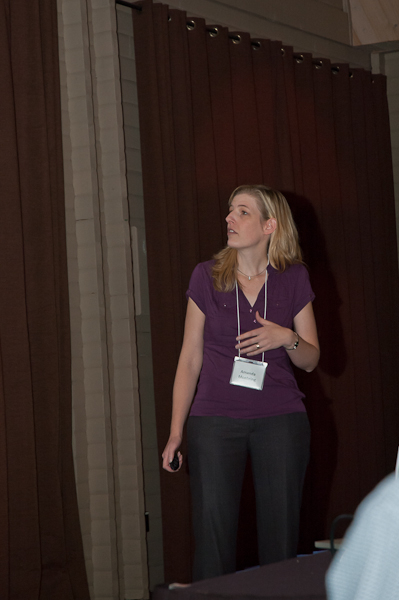
As I mentioned earlier, the student talks are the real highlight of ESO, and this year didn’t disappoint. A wide diversity of topics kept the audience mentally on edge as they heard all about the breakthroughs made by Ontario students. Although all of the talks were well presented and full of excellent research, I personally found blog-reader Miles Zhang’s talk on host shifts in gall wasps (Cynipidae) and their associated parasitoids from a native rose to a recently introduced rose to be one of the most exciting discoveries. A textbook example of the evolutionary pressures imposed by parasitism and the way hosts are constantly looking for an edge! I hope that he’ll agree to share this fantastic story here once he’s published his findings (hint, hint)! Check out the ESO Meeting program for a full list of student presentations, and the President’s Prize winners are listed on the ESO Website.
As part of the meeting package, all the food was provided, and that included the excellent banquet on Saturday night. With plenty of food, wine and fellowship, everyone appeared to be having a great time. Dr. Nusha Keyghobadi shared her research in the field of Lepidopteran landscape genetics during dessert, and after a couple of trips to the pie cart, the grad students organized an impromptu student mixer! It was a great chance to unwind after presentations and discuss some of the shared issues of grad work and life, and carried on well into the night.
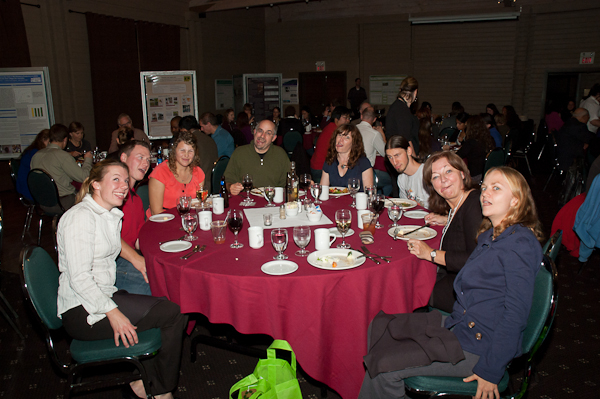
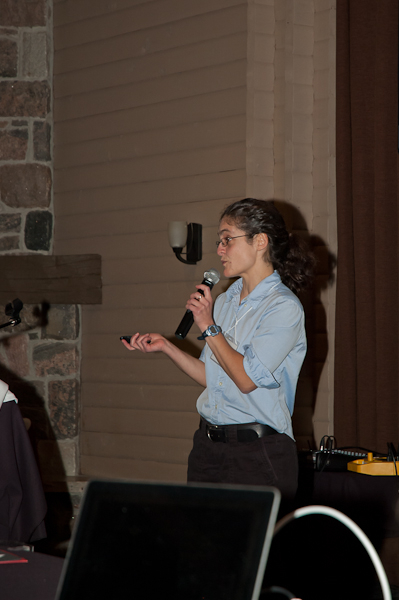
Sunday saw the final student talks, and a few regular member talks before the awarding of ESO Fellowships and the passing of the “Roach & Gavel” to the incoming president.
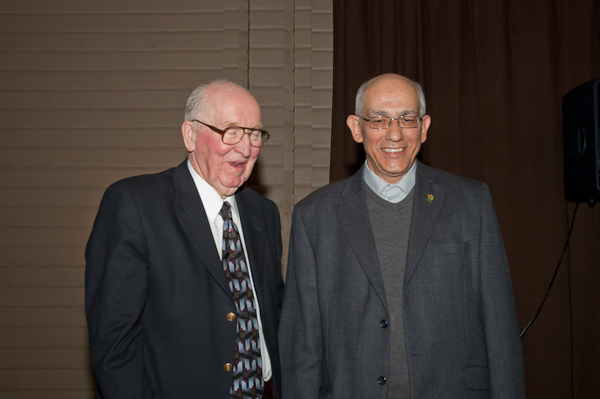
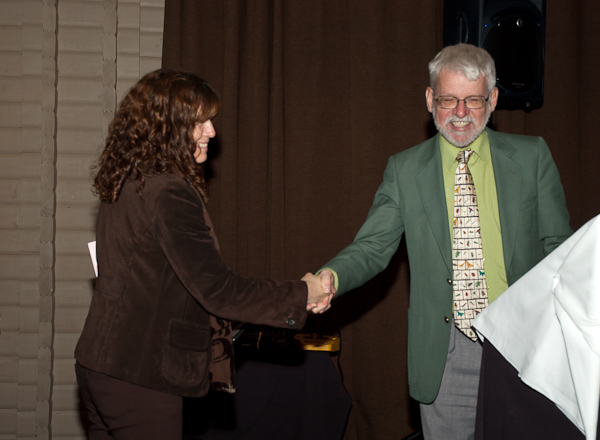
Overall, ESO 2010 was a great success, and more than enough to get me through until the spring and fresh insects! If you’re in the area next year, ESO 2011 will be hosted by Brock University in St. Catharines, Ontario; mark your calendar and start getting that data analyzed!
Today marks the 1st anniversary of Biodiversity in Focus entering the blogosphere, so I thought I’d take some time to reflect back on the year.
The Canadian Journal of Arthropod Identification has just published it’s 11th edition and features the blow flies (Calliphoridae) of eastern Canada. This new paper includes richly illustrated keys to the adults of all genera found in eastern North America and the species found in eastern Canada (excluding the cluster flies (Polleniinae), and the rare, mollusk-parasitizing Melanomyinae). Additionally, two species are newly recorded in Canada (or eastern Canada), and Stephen Marshall has populated the paper with his world-class photographs.
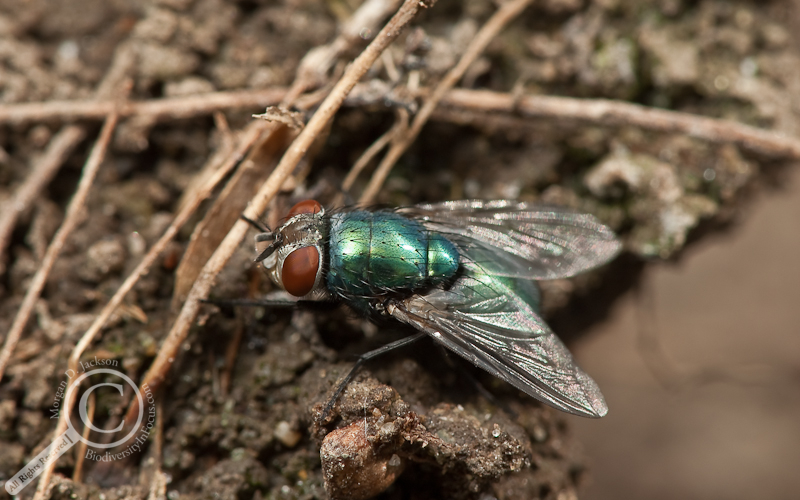
Lucilia sericata, the common green bottle fly
The Calliphoridae are important for a number of reasons, and unlike many insects, correct identifications can quite literally be a life or death choice. These flies are a keystone in forensic entomology, and knowing which species colonize a victim’s body, and when, can mean the difference between catching a killer and convicting the wrong person. The importance of Ontario Calliphoridae is perfectly illustrated in the case of Steven Truscott. Sentenced to death by hanging at the age of 14 for the murder of Lynne Harper in rural Ontario, Truscott’s sentence was commuted to life in prison in 1959. Truscott served his 25 year sentence behind bars, and lived with the stigma of a being a convicted murderer for nearly 50 years. It wasn’t until an appeal before the Ontario Court of Appeal in 2006 that entomological evidence collected at the time of the murder was analysed and presented by Dr. Sherah VanLaerhoven of the University of Windsor. This entomological evidence, largely composed of blow fly maggots, helped to overturn Truscott’s conviction, and led to his acquittal. Sure, forensic entomology wasn’t even on the radar in 1959 (although the coroner at the time had the presence of mind to collect and catalog maggots from on and around the body), but forensic entomologists today are called to hundreds of crime scenes every year to help develop a timeline of events to be used in criminal prosecution.
The majority of people using this paper will not be making these life or death decisions, but being able to identify the species you find on your backyard flowers (because blow flies are also major pollinators) is equally important. Plus, if you choose to play CSI on that dead squirrel under the deck, now you can!
Back in August, while at the International Congress of Dipterology in Costa Rica, I reported on a new species identification technique using some pretty sophisticated technology (i.e. a black piece of paper). The study was published today in PNAS (open access), so I thought I’d revisit it in more detail as our cool science of the week!
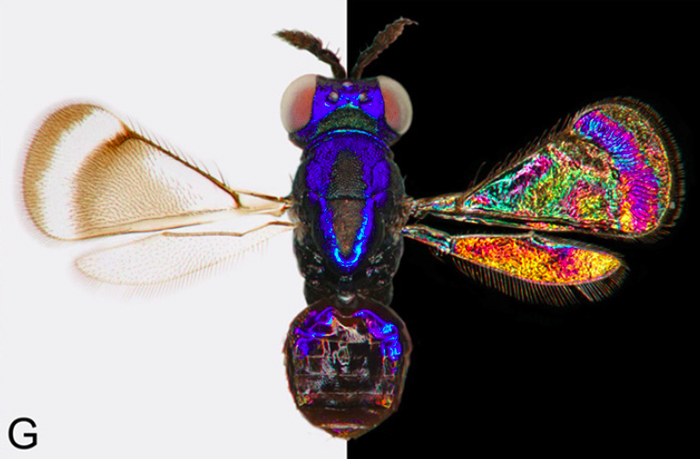
Fig. G from Shevtsova et al., 2011
Happy New Year! Time for a little blog-cleaning!
Regulars likely noticed the blog has had a make-over recently. Not usually one for change, I had little choice after discovering that my old theme was being destroyed by Internet Explorer. After testing 3 different versions of IE (6, 7, & 8), I found that each version rendered my blog differently, and none for the better! Photos were skewed and distorted (a major no-no in my books), sidebars disappeared and formatting was practically non-existent. Since almost one third of the people who visit are using Internet Explorer, I wanted a more consistent theme. Why Microsoft continues to fail at web browsing is beyond me, but I would recommend anyone using Internet Explorer to consider making the switch to another, more web-friendly browser (my favourite is Mozilla Firefox, but Google Chrome is another great choice). [/rant]
As a consequence of this theme shift, I had to reset my RSS feed, so if you had previously subscribed, you’ll probably need to resubscribe. Click the green button on the right and choose your feed aggregator of choice from FeedBurner.
Now that the blog is looking good and working for everyone (hopefully), I’m going to keep the content coming at a more regular pace. The last few months have been a little more hectic than usual, but with a final road map to completion for my Master’s set out and the majority of work completed and written, I’m anticipating having more time to set aside for blogging. I’ve got some weekly features to implement, topics to catch up on, and plenty more!

Along with more content, I’ve signed on to Twitter, so get ready for a daily stream of posts, links, and other entomological miscellanea ready to help you procrastinate! You can click the button on the right, or follow me @BioInFocus. If you’re on Twitter, drop your tag in the comments below, or pass along those that you find worth a click!
Thanks for sticking around, I’m definitely looking forward to ringing in my second year as a part of the blogosphere!
Ever wish you didn’t need those pesky references, formal writing style, or time consuming computer graphics when going to publish your work? A new study published in Biology Letters demonstrates that as long as your science is well done, nothing else matters. The project I’m referring to was done by a group of 8-10 year old elementary school children under the guidance of an ophthalmology professor at University College London (Dr. Beau Lotto), and studied the ability of bumblebees to utilize colour and spatial information while foraging. There have been papers published in the past by student researchers, but what makes this paper special is that the students not only helped with the experiments, but dictated the actual paper itself over a Coke at the local pub and hand drew the figures!
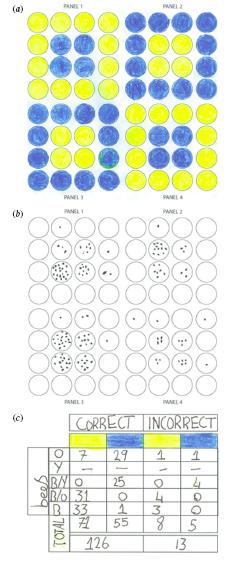
Figure 1 from Blackawton Bees (Blackawton P.S. et al)
There are absolutely no references within the paper as it was argued that the comprehension level of the background material was beyond that of the research group, and ultimately irrelevant to their experimental design and conclusions. Likewise, the writing itself is refreshingly simple and full of truths that many researchers (or at least many grad students I know) can’t put into their papers. My favourite quote (discussing the need to train the bees prior to experimentation):
We did this so that they would learn not to go just to the colours, but had to learn the pattern. Otherwise they might fail the test, and it would be a disaster.
It apparently took Lotto 18 months to find a journal willing to accept it for review given its unorthodox style, with the likes of Nature, Science and pLOS One turning it down before the Royal Linnean Society agreed to run with it. Biology Letters included several independent commentaries on the paper vouching for the novelty of the study. The research itself is a nice little example of citizen science, and worth a read all on its own, but the style in which it was presented is a huge paradigm shift for the scientific community. While I wouldn’t want this sort of publication to become commonplace, it does illustrate that just because someone doesn’t have the resources of an extensive library or 8 years of postgraduate work (heck, even a high school diploma) behind them, doesn’t mean they have nothing to contribute to our understanding of the natural world. The kids say it best:
Science is cool and fun because you get to do stuff that no one has ever done before.
Reference:
Blackawton, P. S., S. Airzee, A. Allen, S. Baker, A. Berrow, C. Blair, M. Churchill, J. Coles, R. F. J. Cumming, L. Fraquelli, C. Hackford, A. Hinton Mellor, M. Hutchcroft, B. Ireland, D. Jewsbury, A. Littlejohns, G. M. Littlejohns, M. Lotto, J. McKeown, A. O’Toole, H. Richards, L. Robbins-Davey, S. Roblyn, H. Rodwell-Lynn, D. Schenck, J. Springer, A. Wishy, T. Rodwell-Lynn, D. Strudwick and R. B. Lotto “Blackawton bees.” Biology Letters.
http://rsbl.royalsocietypublishing.org/content/early/2010/12/18/rsbl.2010.1056.abstract
Thanks to Danielle Fife for passing along the story!


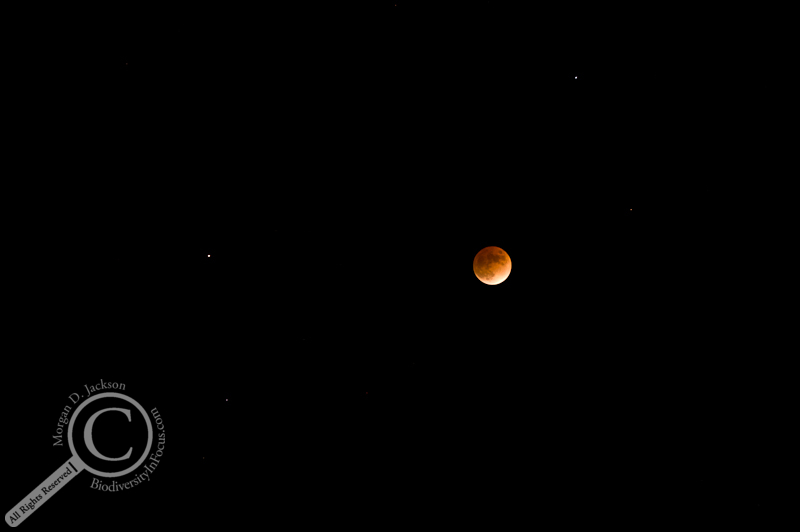
EXIF - 1.6 sec, f/5.0, ISO 400, 70-300mm lens set at 122mm, tripod+remote shutter release
Happy Winter Solstice! It might not be as exciting as Christmas, but the winter solstice signals the lengthening of days, shortening of nights, and the return of summer and insects. Ya, it might be awhile still, but a guy can dream can’t he?
This year also saw a rare occurrence of a full lunar eclipse occurring on the winter solstice. Does it mean anything? Nope, just a special day for a special occasion. Since the next time these two astrological events coincide is in exactly 84 years on Dec. 21, 2094, it would have been a nice time to do some moon-gazing! Of course if it occured at 3am EST on a cloudy night and you have a committee meeting the next day like I did, you had to settle for photos you took in years past!
This shot was from the lunar eclipse of February 2, 2008 and shot from the middle of a rural road north of Guelph. Getting away from the light pollution of cities is the first step in astrophotography. A tripod, a remote shutter release (or warm mitts to guard against the cold while you press that button) and a hot drink all help to get the shot. Unless you live in Western Africa or the South Pacific, you’ll have to wait until June 2012 to try your hand at photographing the next partial lunar eclipse!
If you ask any Dipterist which fly species they daydream about collecting, most will likely respond with a dazed smile and choose Mormotomyia hirsuta (family Mormotomyiidae). This little beast has only been collected twice (once in 1934 and once in 1948) and is believed to live within a single 1 metre wide crevasse on a hilltop in Kenya. This enigmatic fly has been searched for on several occasions since, but each excursion has been unsuccessful.