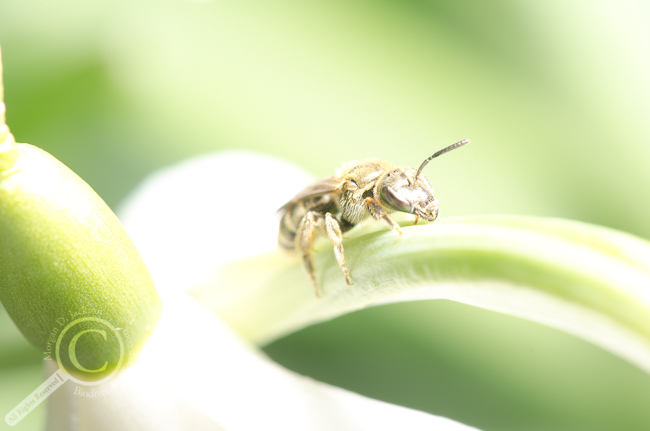
Sometimes equipment, technique and the weather don’t always come together when I’m out photographing insects. Take for example, my recent efforts photographing a halictid bee on a flower. Trying out a new feature on my camera, in the wind and with the winter’s rust still hanging on, I came away with this picture, straight out of the camera:
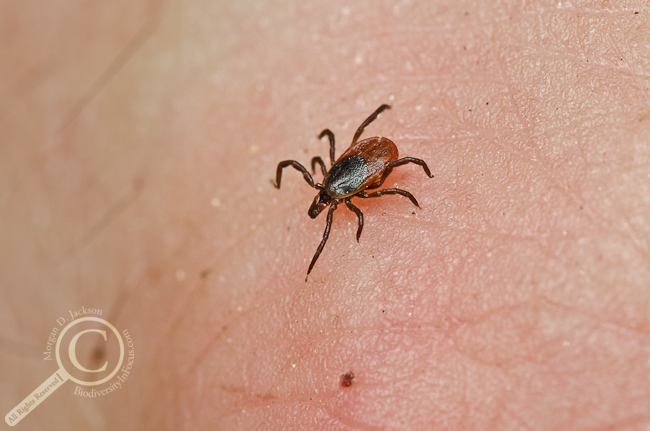
Confession time: ticks creep me out. So much so, I can vividly remember the first time I saw a tick, and can still feel the near-instantaneous wave of nausea that swept over me…
It was back in high school when I had my first run in with these eight legged freaks. I was working part time at a vet’s office (I was an aspiring vet for most of my childhood, before I took a close look at flies) when a beautiful golden retriever came in with it’s owner, looking all goofy and happy-go-lucky, as pretty much every golden retriever does. The owner had brought her dog in because she found a tick on it’s back and didn’t want to risk breaking it on removal. Being curious, I came around the counter with the vet to have a look at the tiny arthropod which I’d heard so much about, expecting a small spider-like creature perhaps feeding like a mosquito. What I wasn’t expecting was a FULLY ENGORGED, dime-sized tick just pulling out and wobbling along the dog’s back! The vet picked it up in a tissue and passed it to me while he checked the wound on the dog’s back. Nearly in shock from what I had just seen, I peeked within the tissue to get a closer look and confirm that I wasn’t in a nightmare, and lo and behold, there in my hand was a giant, grey mass of nastiness. I managed to maintain an air of professionalism while I walked back around the counter with the tissue, and waited until the customer and her dog (oblivious to the entire process it seems) left before breaking my poker face with a look of utter disgust and revulsion! With a small portion of my curiosity still intact, I decided I’d squeeze the tick to see what would happen; I should have known better, but I maintain that I was in shock and not thinking clearly. With the slightest touch, the tick exploded like a tomato hit by buckshot, leaving the tissue looking like a scene from Texas Chainsaw Massacre, and proving that my gag reflex was still working!
Of course, with the amount of time I spend in the field during the summer, I’ve come close to these little Hellians from time to time, and have seen them sitting at the tip of long grasses, waving their little legs back and forth awaiting an unknowing victim. Needless to say, I always do a quick tick check upon arriving home, and can fully appreciate Brad Paisley’s desire to keep his lady friend safe after a romantic picnic!
Now if you’ll excuse me, I think I can feel my skin crawling…
This song is available on iTunes – Ticks (Radio Edit) – Ticks – Single
Thanks to Marianne Alleyne for reminding me of this song!
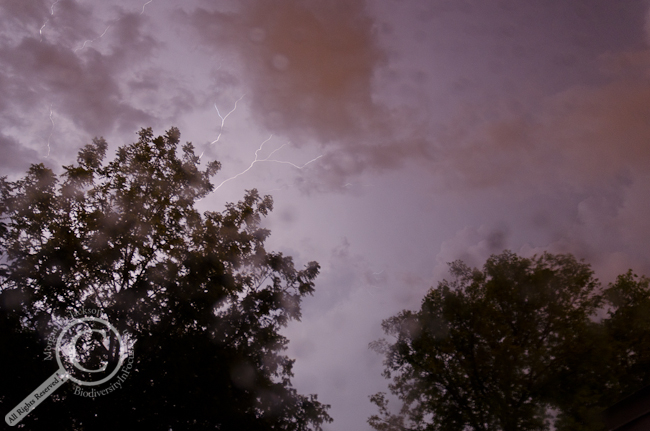
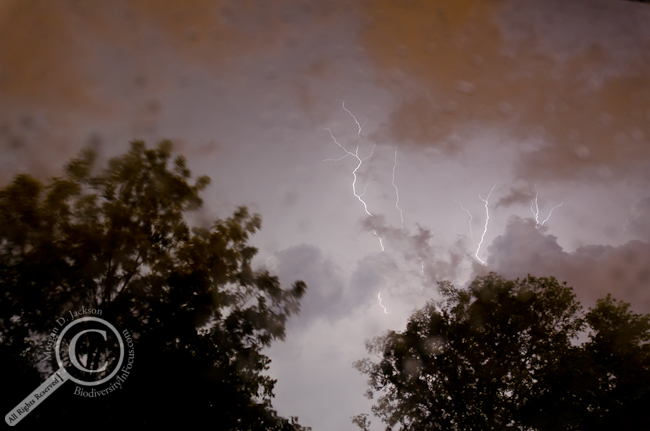
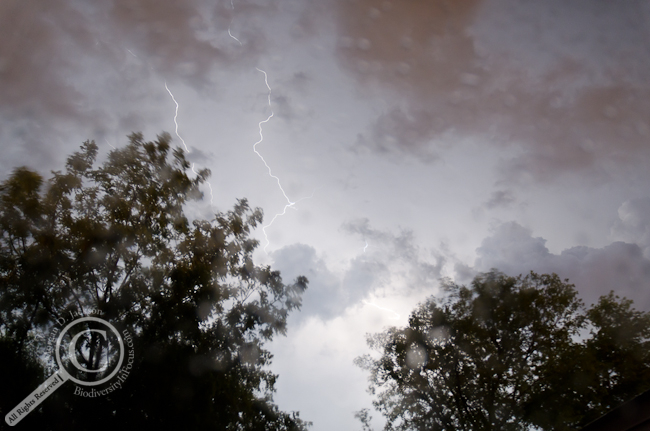
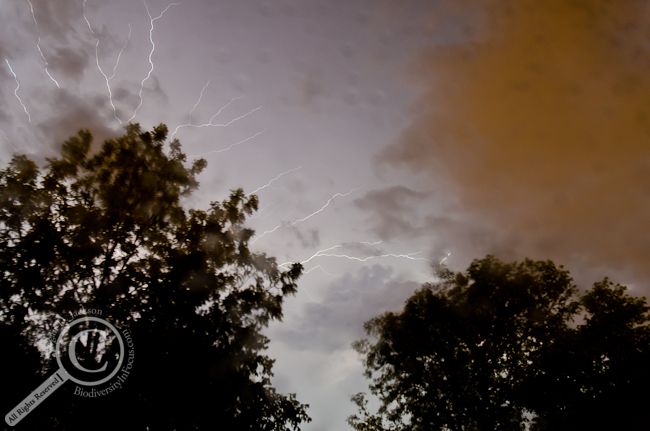
It’s been a hot and humid week here in southern Ontario, reminiscent of the jungles of Central and South America! Ok, I might be dreaming a bit there (sigh), but all this hot’n’humid weather has resulted in some wicked storms in the evenings. Tuesday night featured one of the best displays of lightning I’ve ever seen; more than 80,000 lightning flashes were recorded by Environment Canada! After watching the storm passing over for almost an hour, it dawned on me that I should grab my camera and see what I could get out the window. After a bit of trial and error, here’s some of my favourites. Excuse the water droplets, I chickened out and shot through the windows rather than braving the storm outside!
Is it just me or does that last image look like a phylogenetic tree snaking through the sky? Perhaps I’ve spent too much time in the lab lately…
All of these photos were shot with my 18-70 mm lens (at 18mm) on a Nikon D7000 body. I shot wide open (f3.5) and increased my ISO to 500 in order to record as much lightning as possible. As for the shutter speed, I played around with manageable speeds around 1/10 – 1.o seconds long, which wasn’t enough to get a proper exposure. I ended up settling on a 4 second exposure, which gave me plenty of opportunity to capture the random lightning strikes. The downside to such a long exposure? The smallest hand shake can introduce image-ruining blur, so I put both my elbows on the window ledge, controlled my breathing and concentrated on being very still. Of course, I should have used a tripod, but shooting through a window over the kitchen table at 1 am in the dark isn’t a perfect situation, so I made do and got lucky this time. Next time a high powered storm is forecast, I’ll be sure to be better prepared to take advantage!
With new identification aids, entomological collections begin to give up all manner of hidden treasures. The “Miscellaneous” drawers are no longer out of reach, and determining the species found in your own backyard (sometimes literally) can result in surprising finds.
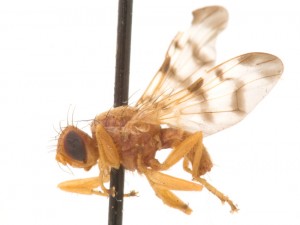
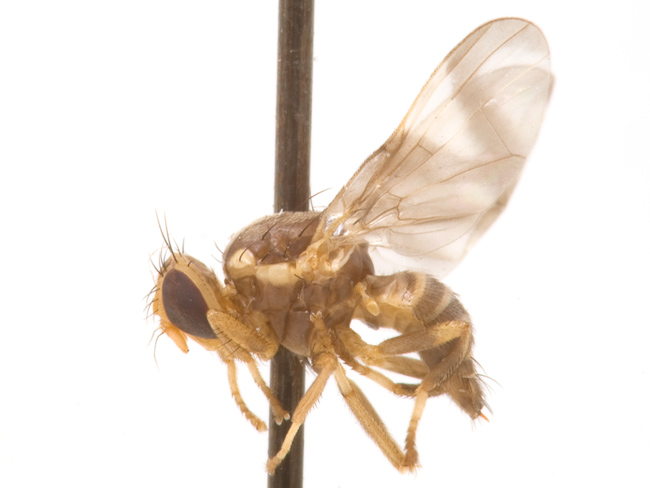
Rhagoletis meigenii is an introduced species from Europe which infests fruits of European barberry (Barberis vulgaris) as larvae. This species had previously been recorded in North America as early as 1986, but after examining specimens from the Lyman Entomological Museum and here at the University of Guelph Insect Collection, I found specimens collected as early as 1956 in Montreal, Quebec and 1977 in Oakville, Ontario! This indicates that it had made it’s way to North America much earlier than previously thought, and either spread extremely rapidly across eastern North America, or had multiple introduction events! Luckily this species isn’t of economic concern (European barberry fruits are eaten and used in jams in Europe, but the plant harbours wheat rust and is considered noxious in North America), but it indicates how easily a non-native species can slip into a new area unnoticed by scientists and society.
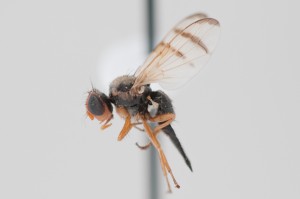
Not all fruit flies enter North America “illegally” though. All three species of Urophora found in Ontario are native to Europe, but were intentionally introduced to help control unwanted, invasive knapweed species. Two of the species introduced became established and quickly spread through southern Ontario (Urophora cardui and Urophora quadrifasciata) while one species didn’t appear to survive. Urophora affinis was experimentally introduced in western Canada where it seemed to thrive, but after release in the early 1980’s at a research plot in Hastings County it failed to be found the next few years, leading the researcher to assume the population hadn’t survived the winter. But, a fly collected 250 km away and more than 20 years later in Simcoe County made it through the curatorial stream, and low-and-behold it was Urophora affinis! Apparently this species did in fact survive the winter, and managed to spread at low population density across central Ontario.
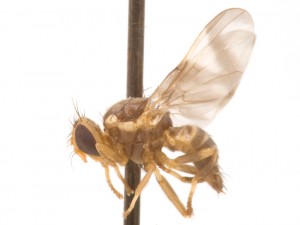
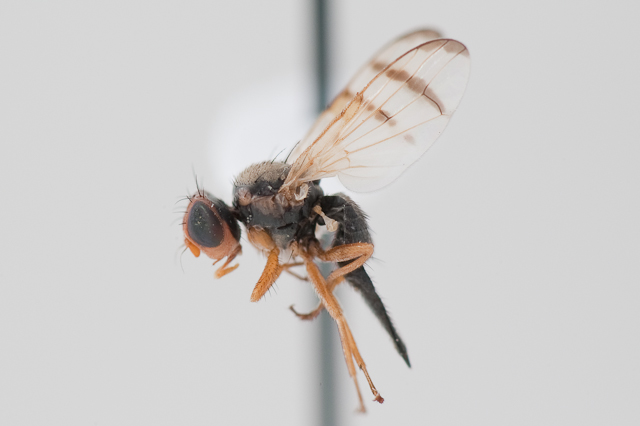
Finding flies thought to be gone is unfortunately not as unlikely as it may seem. Rhagoletotrypeta rohweri is a rarely collected species that hadn’t been seen since 1962. Or at least it hadn’t been thought to have been seen since then! The University of Guelph Insect Collection actually has 4 specimens collected between 1978 and 1985 around Point Pelee National Park. Hopefully this is evidence that this species is still clinging to existence in small pockets of eastern North America!
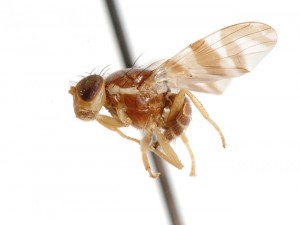
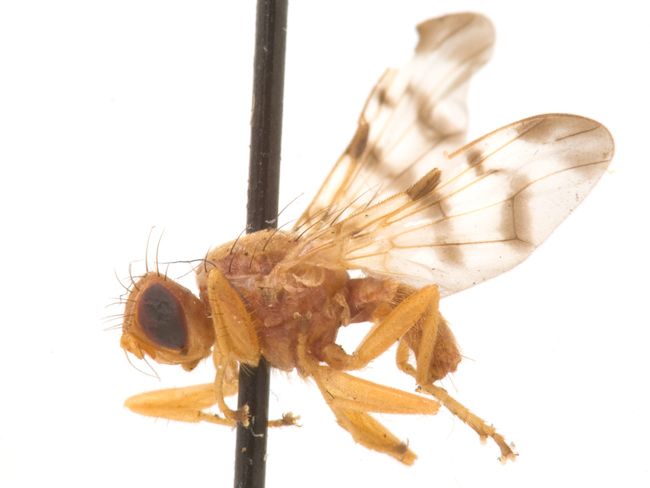
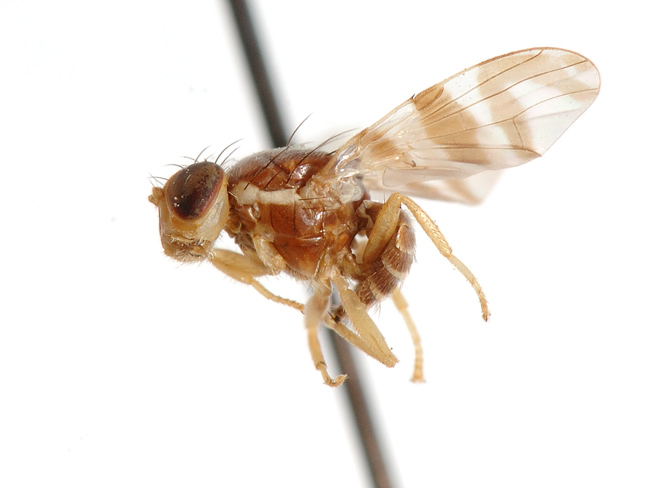
To round out some of the important species uncovered during this study, here’s Rhagoletis chionanthi. This species had previously only been recorded from North Carolina and Florida, making it’s presence in Ontario a significant expansion of its natural range! Of course this also begs the question as to what it’s using for a larval habitat; the only recorded host plant for R. chionanthi is Chionanthus virginicus (see what they did there, naming the species after its host? Crafty taxonomists…), a plant species which hasn’t been recorded from Canada yet! So what may be happening here? Has the plant expanded it’s range into Canada, bringing it’s pest with it? Or does Rhagoletis chionanthi have multiple hosts? Of course, the apple maggot fly, Rhagoletis pomonella, actually underwent a host-shift from hawthorn to apples when the latter were cultivated in North America, so perhaps Rhagoletis chionanthi has undergone a similar host-shift which we aren’t aware of!
Of course none of these records would have been possible without the entomological collections housed at universities or under provincial or federal care. At a time when taxonomy and natural history collections are devastatingly under funded (or threatened with military take-over), their intrinsic value is made clear through faunistic studies such as this. Who knows what other treasures are awaiting discovery in entomological collections, both large and small? New species await description, rare species make surprise appearances, and the dynamics between species and geography are unfolding with every study!

Tuesday Tunes – Fireflies – Owl City
Well it seems the summer has finally arrived, and with it the warm temperatures! I always associate fireflies with summer, with their flickering lights during hot nights. I’m going to attribute my procrastination lately to the heat, and call in lame, providing you a simple song with simple lyrics! Perhaps, take a moment and think back to summer’s past and the memories you’ve had with fireflies!
I’ll try to stop being lame this week and finish up all those posts I promised for last week! Until then, keep cool and enjoy the summer’s eve!
This song is available on iTunes – Fireflies – Ocean Eyes
We’ve heard it repeated in the media before, with varying degrees of alarmism; honey bees are disappearing, and society better repent before we follow them. Termed Colony Collapse Disorder (CCD) in North America, the number of bee colonies which are dying or exiting en mass (swarming) leaving beekeeper’s hives empty has garnered a great deal of attention in the past few years. Of course there’s plenty of evidence that honey bee populations have been in decline for decades and CCD isn’t really a new phenomenon, but sometimes facts just get in the way of a good story, don’ t they?
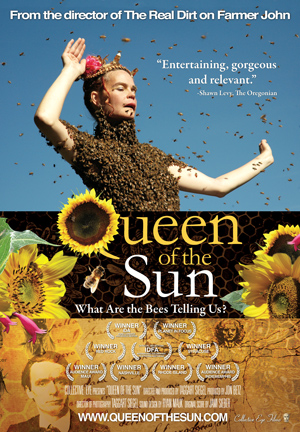
That’s the way I felt after watching the new documentary Queen of the Sun: What Are The Bees Telling Us? – the production team didn’t want to weigh the audience down with actual evidence for theories proposed by featured beekeepers or even some of the “experts”. That’s not to say I didn’t enjoy the film, I did, I just left feeling that so much more could have been done to educate the audience.
The movie starts off with endless acres of almond trees in California and the bees trucked in from around the USA tasked with pollinating this giant monoculture. From here the film gathers the opinions of some of the most eccentric beekeepers I’ve seen (which is saying something, trust me) on why the bees are disappearing, with some input from “experts”. It was the beekeepers which make this movie worth a watch, and while each and every one of them personifies bees more than I’d like (damn my scientific objectivity), and there is a lot of Gaiaism and Druid religious undertones, meeting and watching these beekeepers work was a lot of fun. Whether it was the bee historian/Yogi who tickles his bees with his impressive mustache or the rooftop apiculturists in London, UK & Brooklyn, New York (where in the former city beekeeping is legal and the latter illegal), the filmmakers found some very interesting people who shared a passion for their hobby/trade.
The majority of the theories on what is causing the decline of the bees comes from the beekeepers with notes thrown in from the chosen “experts”. I’m using the term “expert” loosely, mainly because there were virtually no credentials or explanation about what made each person an “expert” on the topic. Some I recognized, like May Berenbaum from University of Illinois or Scott Black of the Xerces Society and trusted their opinions because of my knowledge of their work. Others, I have no clue why they were consulted; a physicist discussing genetically-modified plants transferring modified bacteria genomes to bees, without mention of why a physicist would be involved with this research or what institute she was associated with? Providing further credentials and background for each expert would allow the audience to make an informed decision on the information provided to them.
Overall, Queen of the Sun was an entertaining movie with some beautiful photography and fantastic people. If you’re looking for a movie which celebrates individuality and passion for apiculture, then this is your movie. If you’re looking for a scientific nature documentary, stick to David Attenborough and the BBC!
There are few insects which enjoy the adoration, fame and geographical range that the domestic honey bee (Apis mellifera) does, so it’s surprising that there are relatively few songs singing their praises. Of course, that doesn’t stop artists of all eras from using the sweet “nectar” produced by these entomological factory farms as a cutesy term of endearment for a loved one! Makes you wonder whether Blake Shelton is known as “honey bee” to his wife…
I first head this song on Twitter via Dr. May Berenbaum (@MayBerenbaum) which makes a slick segue into my next post; a review of the new documentary Queen of the Sun, which features Dr. Berenbaum’s expert opinions on the plight of the honey bee in America! Pretty good eh? Make sure you check it out soon, but until then, Fleacrest, out!
This song is available on iTunes – Honey Bee – Honey Bee – Single
Normally I’m pretty excited to see a new identification guide published in the Canadian Journal of Arthropod Identification; I get to see great images of insects I haven’t come across (yet), ID any of my photos which I couldn’t previously, and just have something new to read that I find especially interesting. The most recent publication is a little more exciting for me however, as I’m the lead author and it marks the culmination of several years work! W00t!
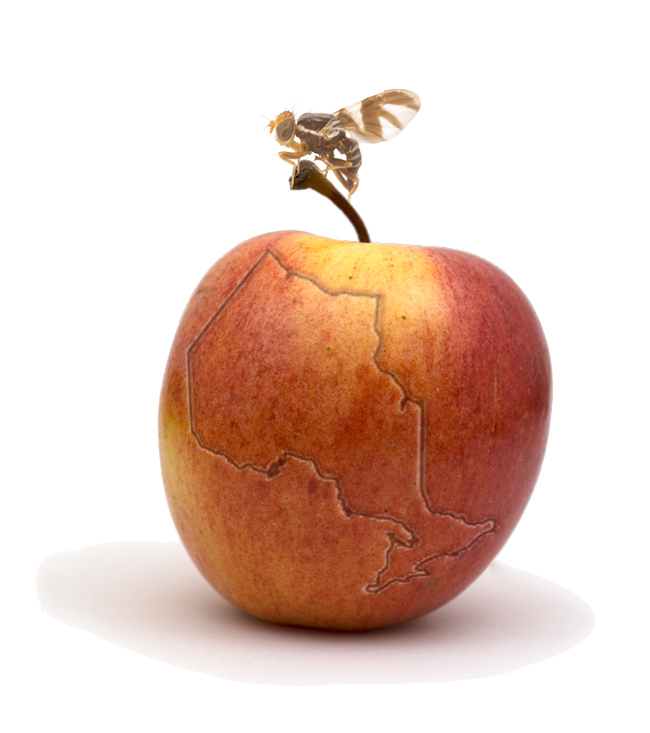
Without further ado, I present to you the Fruit Flies (Tephritidae) of Ontario! I’ll be going over the different aspects of the paper all this week; today focusing on the identification tools, Wednesday on a few of the important species, and Friday I’ll talk about how it’s relatively easy to contribute to CJAI!
Just a quick post to pass along a menage a trois of new insect blogs which have ties to McGill University in Montreal, Quebec!
Chris Borkent is not only a PhD student working on fungus gnat (Mycetophilidae) taxonomy at McGill, but also an avid naturalist. Chris will be sharing his knowledge and observations on all things natural that he makes during his walk to work at the Lyman Entomological Museum over at his new blog, Natural History in Suburbia. Another dipterist is now online; beware!
Speaking of the Lyman Entomological Museum, they’ve recently started a blog highlighting the research accomplishments and field work being undertaken at their institution. There are a bunch of great entomologists working in the Lyman Museum, so be sure to watch for lots of interesting news!
Finally, McGill alum Brigette Zacharczenko is working towards her MSc PhD at the University of Connecticut by studying the systematics of moths in the family Noctuidae, and has just started a blog chronicling the life history of her research subjects. With some absolutely stunning photos of moth eggs and caterpillars, caterpillarblog is definitely going to be one to watch! Also, Brigette is a super creative seamstress who designs, creates and sells plush invertebrates under the pseudonym Weird Bug Lady. An awesome nickname, and anyone with an interest in insects should check out those cute-n-cuddly works of art right now!
Tuesday Tunes – Fruit Fly – Nada Surf
It was a great long weekend for us Canadians, with more than decent weather in my area, cold beer, and BBQ! I also came to the conclusion that I’m going to start referring to the holiday as Linneaus Day rather than Victoria Day; Linneaus contributed more to global society, considered himself royalty, and holds taxonomic priority – he was born in 1707 while Queen Victoria wasn’t born until 1819! But I digress…
Along with the great weather and beer, I’ve put the final touches on my first peer-reviewed journal article, which should be coming online sometime around lunch today! I’ll be blogging about it later on, but for now, here’s a song somewhat on topic by Nada Surf; Fruit Fly.
I’m pretty sure this song is referring to a family which are frequently called “fruit flies” but which I call “vinegar flies” – Drosophilidae. These diverse nuisances aren’t the same family as I’m publishing on, but the title “Fruit Fly” does fit my group, the Tephritidae. The closest I could come to finding a tephritid-relevant musical selection was the Seattle-area punk band Apple Maggot Quarantine Area, but they didn’t have any useful videos to share…
Anyways, keep an eye out later today for the full story!
This song is available on iTunes – Fruit Fly – Let Go