Dec 232010
 

Ever wish you didn’t need those pesky references, formal writing style, or time consuming computer graphics when going to publish your work? A new study published in Biology Letters demonstrates that as long as your science is well done, nothing else matters. The project I’m referring to was done by a group of 8-10 year old elementary school children under the guidance of an ophthalmology professor at University College London (Dr. Beau Lotto), and studied the ability of bumblebees to utilize colour and spatial information while foraging. There have been papers published in the past by student researchers, but what makes this paper special is that the students not only helped with the experiments, but dictated the actual paper itself over a Coke at the local pub and hand drew the figures!
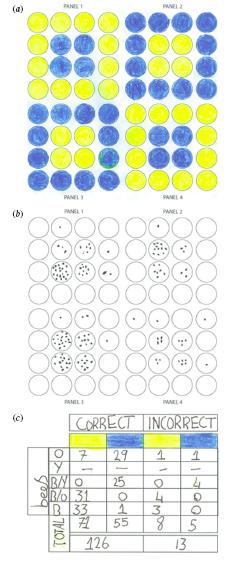
Figure 1 from Blackawton Bees (Blackawton P.S. et al)

Figure 1 from Blackawton Bees (Blackawton P.S. et al)

There are absolutely no references within the paper as it was argued that the comprehension level of the background material was beyond that of the research group, and ultimately irrelevant to their experimental design and conclusions. Likewise, the writing itself is refreshingly simple and full of truths that many researchers (or at least many grad students I know) can’t put into their papers. My favourite quote (discussing the need to train the bees prior to experimentation):

We did this so that they would learn not to go just to the colours, but had to learn the pattern. Otherwise they might fail the test, and it would be a disaster.

It apparently took Lotto 18 months to find a journal willing to accept it for review given its unorthodox style, with the likes of Nature, Science and pLOS One turning it down before the Royal Linnean Society agreed to run with it. Biology Letters included several independent commentaries on the paper vouching for the novelty of the study. The research itself is a nice little example of citizen science, and worth a read all on its own, but the style in which it was presented is a huge paradigm shift for the scientific community. While I wouldn’t want this sort of publication to become commonplace, it does illustrate that just because someone doesn’t have the resources of an extensive library or 8 years of postgraduate work (heck, even a high school diploma) behind them, doesn’t mean they have nothing to contribute to our understanding of the natural world. The kids say it best:

Science is cool and fun because you get to do stuff that no one has ever done before.

Reference:

Blackawton, P. S., S. Airzee, A. Allen, S. Baker, A. Berrow, C. Blair, M. Churchill, J. Coles, R. F. J. Cumming, L. Fraquelli, C. Hackford, A. Hinton Mellor, M. Hutchcroft, B. Ireland, D. Jewsbury, A. Littlejohns, G. M. Littlejohns, M. Lotto, J. McKeown, A. O’Toole, H. Richards, L. Robbins-Davey, S. Roblyn, H. Rodwell-Lynn, D. Schenck, J. Springer, A. Wishy, T. Rodwell-Lynn, D. Strudwick and R. B. Lotto “Blackawton bees.” Biology Letters.

http://rsbl.royalsocietypublishing.org/content/early/2010/12/18/rsbl.2010.1056.abstract

Thanks to Danielle Fife for passing along the story!

Dec 082010
 

If you ask any Dipterist which fly species they daydream about collecting, most will likely respond with a dazed smile and choose Mormotomyia hirsuta (family Mormotomyiidae). This little beast has only been collected twice (once in 1934 and once in 1948) and is believed to live within a single 1 metre wide crevasse on a hilltop in Kenya. This enigmatic fly has been searched for on several occasions since, but each excursion has been unsuccessful.

Continue reading »

Oct 312010
 

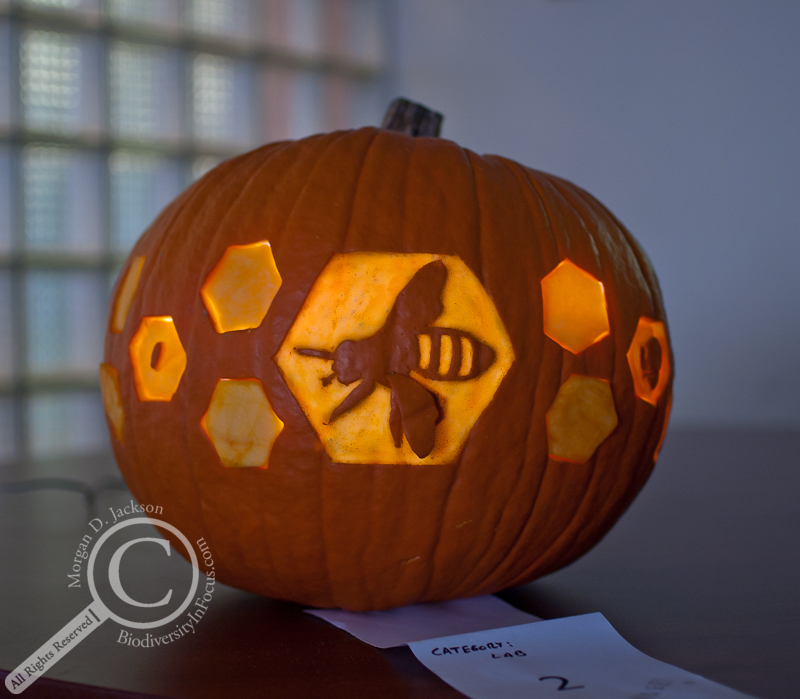
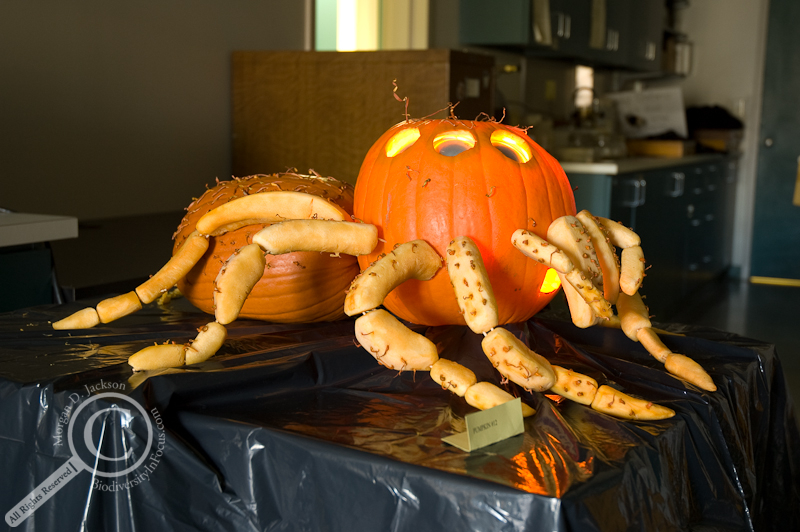
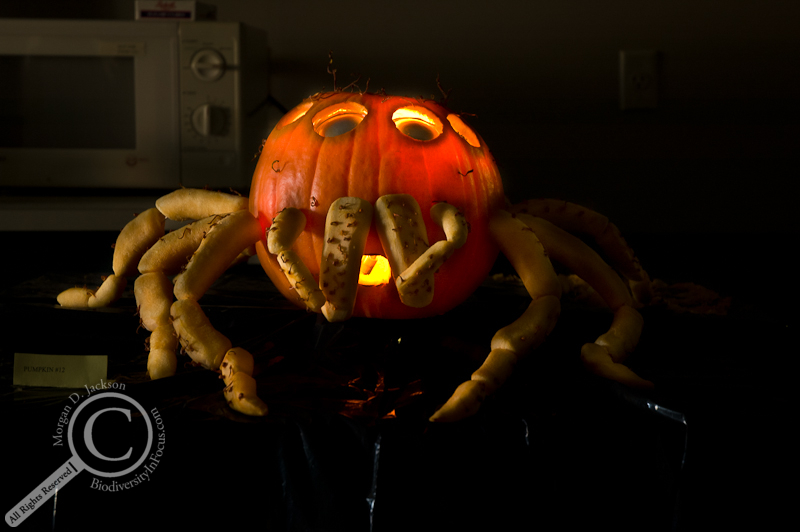
Although we had a good time carving our various insects Thursday night, we still had to come up with a new pumpkin design for our department’s contest Friday afternoon. With a pumpkin supplied by the graduate student council and 2 hours to carve our winning design, the pressure was on to uphold our title as pumpkin champions! After a strategy session over coffee, we decided to bee proactive and get busy.

Bee Pumpkin Jack-o-Lantern

Continue reading »

Oct 272010
 

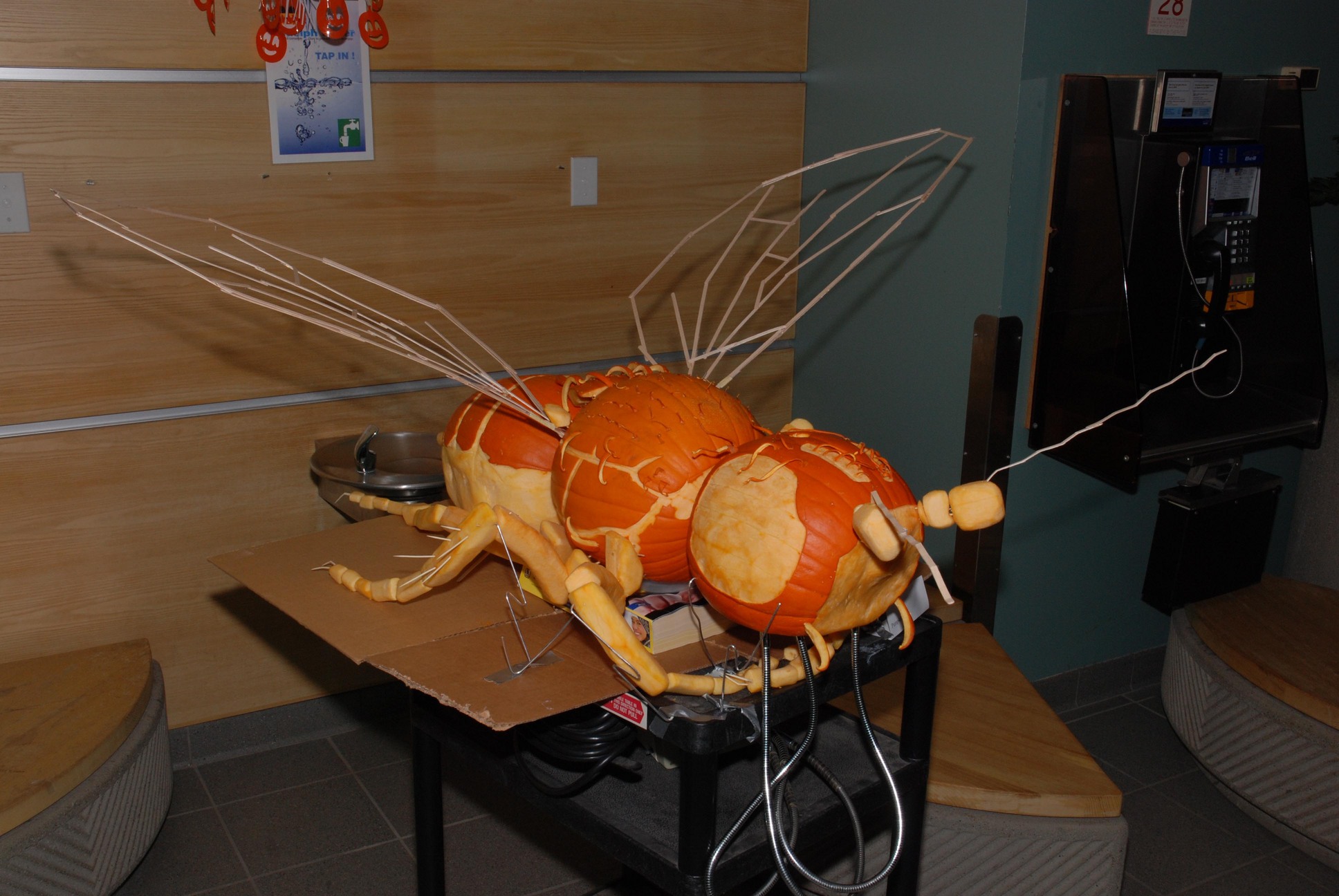
Having found success with our jumping spider, we ventured further into the realm of morphological correctness, and constructed an ode to our advisor, Dr. Steve Marshall:

Sphaeroceridae Pumpkin Carving Jack-o-Lantern Fly Insect

Photo courtesy of Matt Bergeron

This lovely creature is a morphologically correct Sphaerocerid fly, right down to wing venation and the square rear basitarsus (hard to see in this picture, but it’s there, trust me). I was working in Ottawa at the time so I can’t claim any credit for this, but I believe it was another 8+ hours of work between 3-4 grad students. The sculptors incorporated a range of materials, including a wire frame for leg and head support, toothpicks for bristles and tarsal claws, and popsicle stick wing veins. As per the jumping spider, we use fiberoptic microscope lights to illuminate our creations (the silver tubes sticking out from below the head). Unfortunately there are no images of the fly lit up, but I hear it was pretty spectacular!

Oct 252010
 

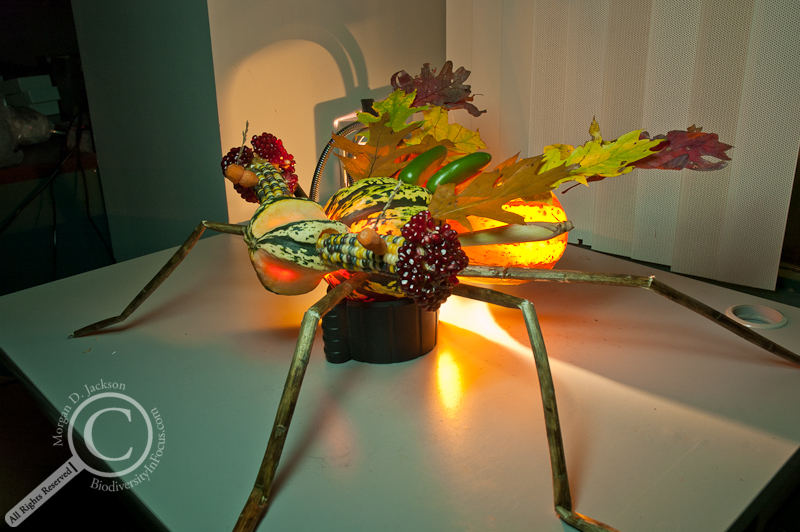
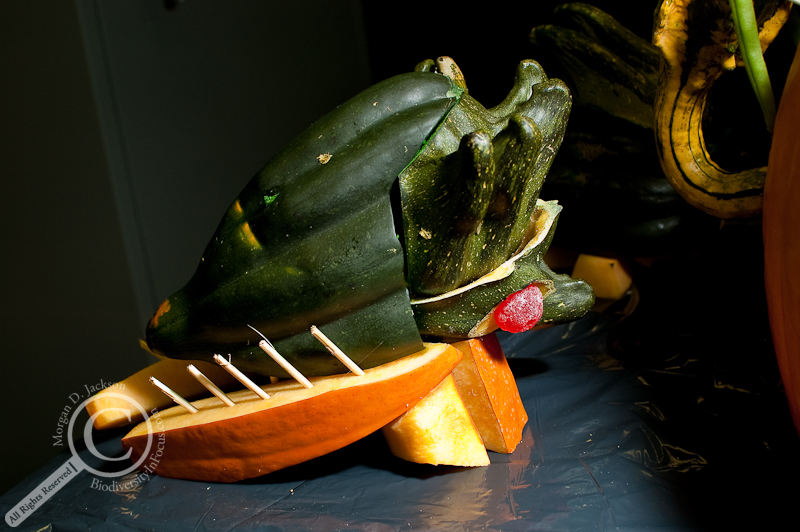
Leading up to Halloween, I thought I’d share some of the pumpkin creations that our lab creates for our annual departmental pumpkin carving contest. We’re lucky to belong to a department full of competitive and talented pumpkin carvers, so we’ve needed to up our game every year, resulting in some pretty cool pumpkin designs. We generally make an evening of it, with all the available grad students, undergrad volunteers, post-docs, lab managers, etc joining in and making some ent-o-lanterns!

2007 was my first Halloween as a grad student, and the pumpkin carving really started to take off:

Jack-o-Lantern of Jumping Spider Pumpkin Insect

Jumping Spider Jack-o-Lantern Pumpkin Insect

Composed of 3 pumpkins (one each for the cephalothorax and abdomen, and one carved into legs), we used the bottoms of popcans to recreate the globular shining eyes, and small peelings of pumpkin skin embedded into the parts for bristles. The “bristles” actually dried out over night, curling and appearing more life-like. Time for completion? 8+hours with 5 grad students.

Oct 152010
 

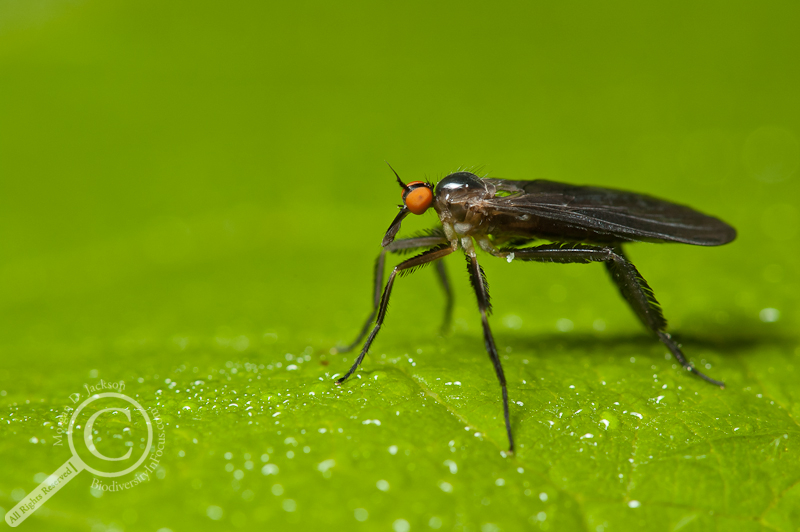
Empididae dance fly on green leaf with water droplets

Water, water everywhere, and not a fly in sight! Well, not actually, because the vast majority of flies could be considered aquatics. I’m not just talking about those flies that actually are aquatic at some stage of their life (like chironomid midge larvae, or black fly larvae; I’ll discuss them later), but rather how even those considered “terrestrial” require extremely moist habitats. Take for example, larve of the Xylophagidae, which in North America live in the humidor of rotting bark on downed trees. Or fruit flies (both the true fruit flies {Tephritidae} and the household “Drosophila” melanogaster), which develop in live fruits, stems, flower heads, and leaves for the former, and rotting fruits in the latter. A decaying body is a wet place, and harbours plenty of maggots, usually of Calliphoridae. A live body is also a wet place, and can be colonized by a number of families (termed myiasis) including the infamous bot fly (Oestridae). In fact, very few flies come to mind that don’t spend at least a part of their life in a humid/moist/wet environment.

Besides the vast diversity of “aquatic” flies, flies that are truly aquatic as larvae have been found to be important bioindicators of the health of their watery homes. Phantom midges (Chaoboridae) and their larvae have been used to monitor heavy metals such as nickel in northern Ontario lakes. Black fly larval diversity and species composition has been used to evaluate the health of rivers, especially in northern Canada (imagine that field work, ouch).

Finally, there are some flies which defy convention and dive headlong into the water (skip to 4:40 to see the flies, taken from The Future is Wild series):

The tiny beauty around us

 Blogosphere, Cool Science, Insects, Photography  Comments Off on The tiny beauty around us
Oct 132010
 

The winners of the yearly Nikon Small World Photomicrography Contest were announced today, and some incredible and ingenious insect images took top honours!

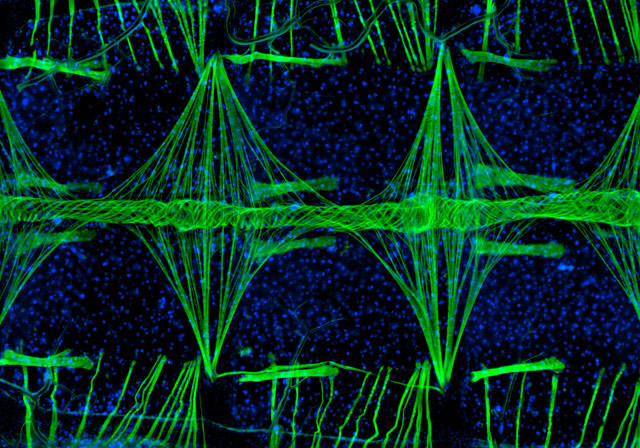
Mosquito (Anopheles gambiae) Heart by Jonas King from Nikon Small World Contest

1st Place - Mosquito (Anopheles gambiae) Heart by Jonas King

This image by Jonas King, a graduate student at Vanderbilt University in Tennessee, is the heart of Anopheles gambiae, a mosquito species which serves as a vector for malaria. Kings’ research examined how hemolymph circulation influences malaria trypanosome migration from the gut to the salivary glands, and this image of the heart (muscle fibres are dyed green with individual cell nuclei bright blue) was a fantastic result of that research.

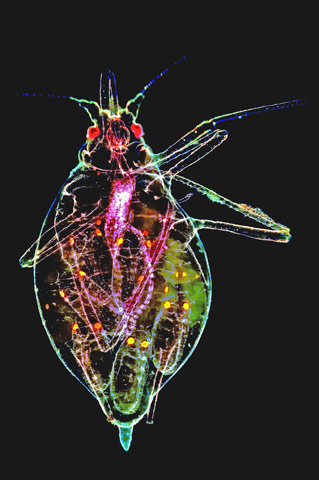
Black bean aphid with offspring inside her body by Dr. Tomas Cabello from Nikon Small World Photomicrography Contest

Popular Vote Winner - Black bean aphid (Aphis fabae) with offspring inside her body by Dr. Tomas Cabello

Earning an Image of Distinction from the contest judges, Dr. Tomas Cabello’s photo of a black bean aphid carrying live young was voted the most popular by the public. By using phase contrast microscopy, Dr. Cabello illustrates just how crowded it can be when you’re parthenogenetically viviparous!

There’s a further 120 images from this years competition that I encourage you to peruse, and feature a wide range of colourful, beautiful natural wonders revealed through magnification. There is also an historical record of winners going back to 1977, and I just want to highlight how far photomicrography and photography have come in that time.

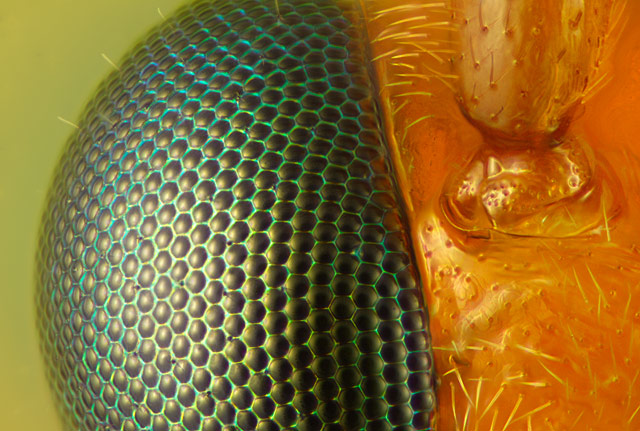
Ichneumonidae Eye by Charles Kreb from Nikon Small World Contest

17th place 2010 - Ichneumonidae Eye by Charles Kreb

This image of an ichneumonid wasp compound eye and antennal base by Charles Kreb garnered a 17th place finish in this year’s contest. In contrast, check out the 11th place image from 1987:

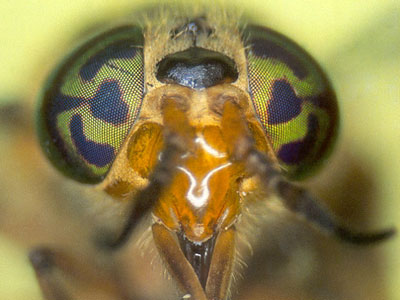
Deer fly (Tabanidae) head by Robert L. Calentine from Nikon Small Wonders Contest 1987

11th place 1987 - Deer fly (Tabanidae) head by Robert L. Calentine

This is still a great photo given the resources and technology of the time, but with new digital cameras, photo stacking algorithms and photo manipulation techniques, the sky is the limit for the future of imaging even the smallest of insects now. If you have experience with photomicrography or a subject which you think the world should see up close and personal, I encourage you to enter next year’s competition and help people see the beauty in all aspects of nature!