Jan 052011
 

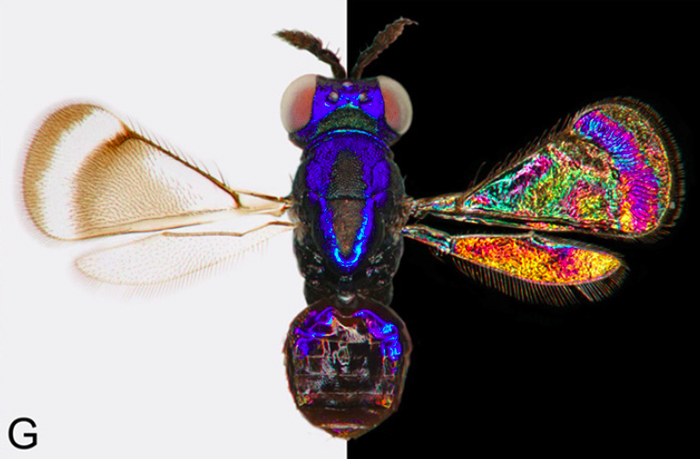
Back in August, while at the International Congress of Dipterology in Costa Rica, I reported on a new species identification technique using some pretty sophisticated technology (i.e. a black piece of paper). The study was published today in PNAS (open access), so I thought I’d revisit it in more detail as our cool science of the week!

Shevtsova et al., Fig. G, 2011

Fig. G from Shevtsova et al., 2011

Continue reading »

Dec 082010
 

If you ask any Dipterist which fly species they daydream about collecting, most will likely respond with a dazed smile and choose Mormotomyia hirsuta (family Mormotomyiidae). This little beast has only been collected twice (once in 1934 and once in 1948) and is believed to live within a single 1 metre wide crevasse on a hilltop in Kenya. This enigmatic fly has been searched for on several occasions since, but each excursion has been unsuccessful.

Continue reading »

Oct 272010
 

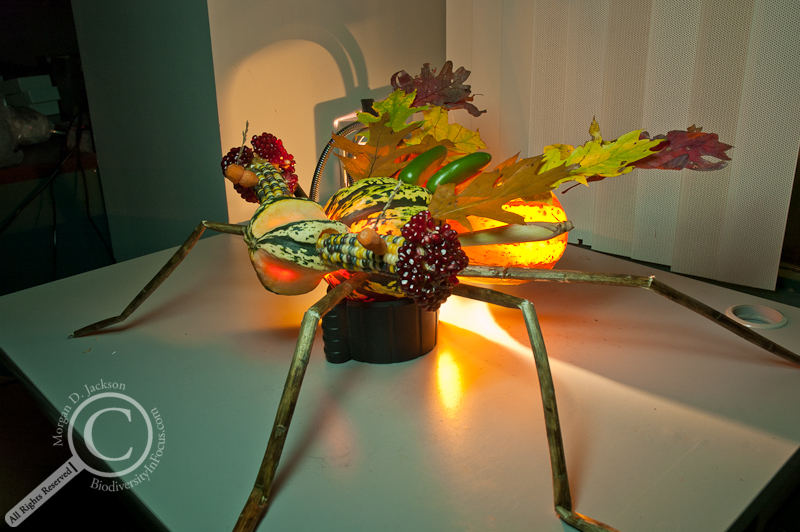
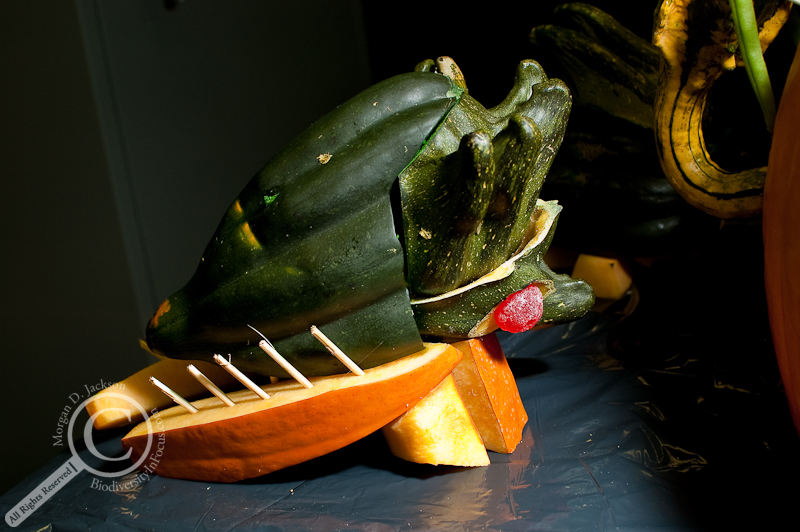
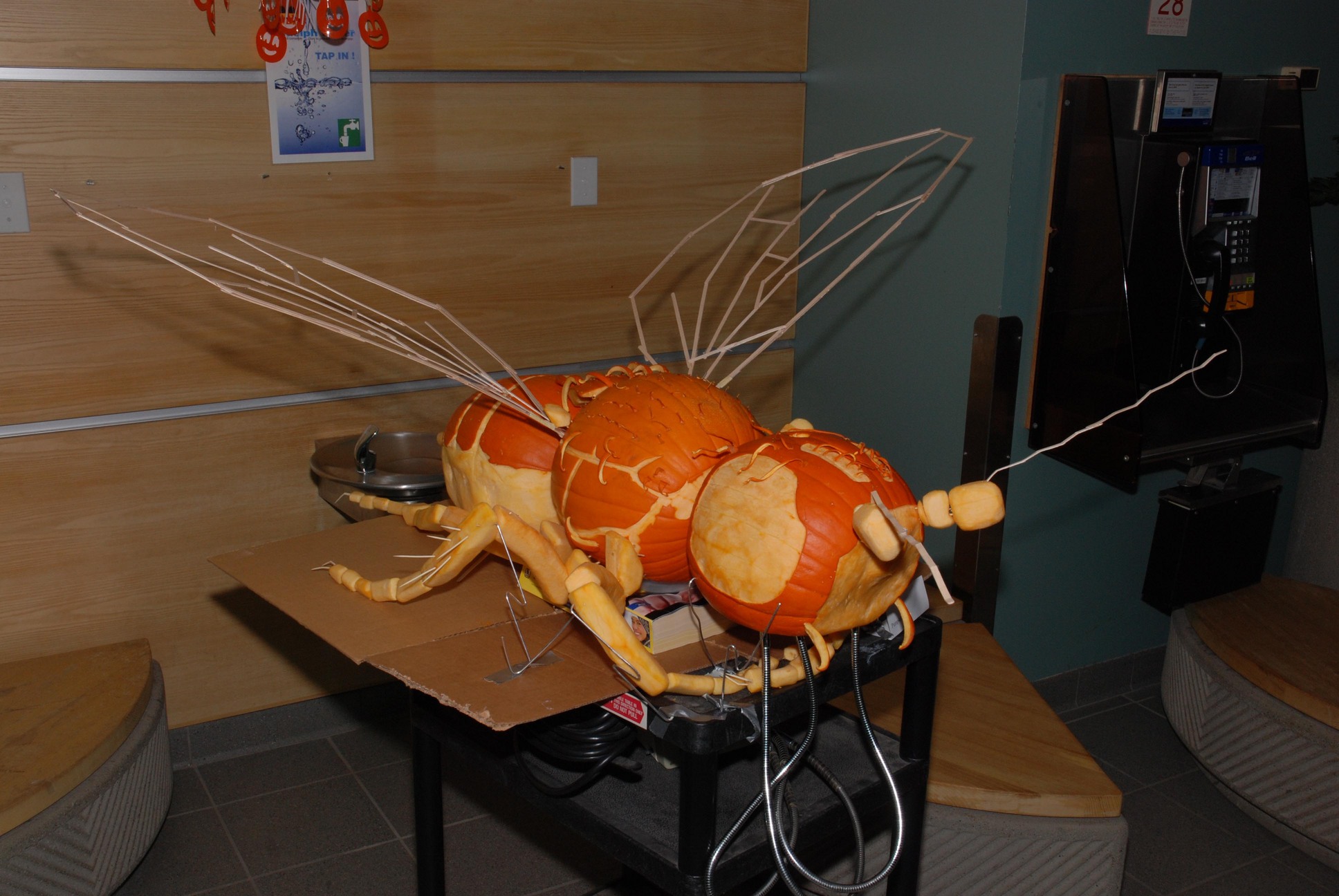
Having found success with our jumping spider, we ventured further into the realm of morphological correctness, and constructed an ode to our advisor, Dr. Steve Marshall:

Sphaeroceridae Pumpkin Carving Jack-o-Lantern Fly Insect

Photo courtesy of Matt Bergeron

This lovely creature is a morphologically correct Sphaerocerid fly, right down to wing venation and the square rear basitarsus (hard to see in this picture, but it’s there, trust me). I was working in Ottawa at the time so I can’t claim any credit for this, but I believe it was another 8+ hours of work between 3-4 grad students. The sculptors incorporated a range of materials, including a wire frame for leg and head support, toothpicks for bristles and tarsal claws, and popsicle stick wing veins. As per the jumping spider, we use fiberoptic microscope lights to illuminate our creations (the silver tubes sticking out from below the head). Unfortunately there are no images of the fly lit up, but I hear it was pretty spectacular!

Oct 152010
 

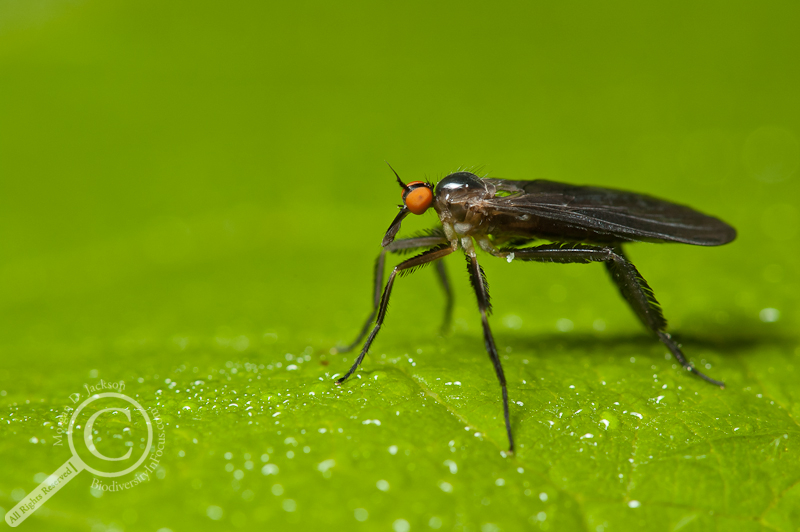
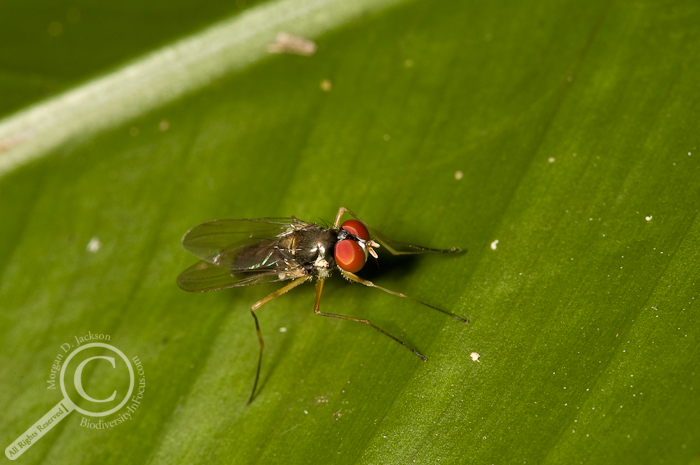
Empididae dance fly on green leaf with water droplets

Water, water everywhere, and not a fly in sight! Well, not actually, because the vast majority of flies could be considered aquatics. I’m not just talking about those flies that actually are aquatic at some stage of their life (like chironomid midge larvae, or black fly larvae; I’ll discuss them later), but rather how even those considered “terrestrial” require extremely moist habitats. Take for example, larve of the Xylophagidae, which in North America live in the humidor of rotting bark on downed trees. Or fruit flies (both the true fruit flies {Tephritidae} and the household “Drosophila” melanogaster), which develop in live fruits, stems, flower heads, and leaves for the former, and rotting fruits in the latter. A decaying body is a wet place, and harbours plenty of maggots, usually of Calliphoridae. A live body is also a wet place, and can be colonized by a number of families (termed myiasis) including the infamous bot fly (Oestridae). In fact, very few flies come to mind that don’t spend at least a part of their life in a humid/moist/wet environment.

Besides the vast diversity of “aquatic” flies, flies that are truly aquatic as larvae have been found to be important bioindicators of the health of their watery homes. Phantom midges (Chaoboridae) and their larvae have been used to monitor heavy metals such as nickel in northern Ontario lakes. Black fly larval diversity and species composition has been used to evaluate the health of rivers, especially in northern Canada (imagine that field work, ouch).

Finally, there are some flies which defy convention and dive headlong into the water (skip to 4:40 to see the flies, taken from The Future is Wild series):

Aug 272010
 

One of the talks that drew the largest crowds at the 7th International Congress of Dipterology a few weeks ago was on the functional morphology and sexual selection in mating tsetse flies, Glossina pallidipes & Glossina swynnertonni (Glossinidae)*. Why was a talk on fly porn so popular you may ask? Well  Dipterists in general are always on the lookout for mating opportunities (of their research subjects – get your mind out of the gutter) and with the promise of videos and a new technique, it was like a moth to a flame (so to speak). The videos were amazing, and as of last night were made available via YouTube for the world to see! (Explanation after the videos)

Full speed video of G. pallidipes:

Slow Motion video of G. pallidipes:

Slow motion video of G. swynnertonni:

So what’s going on here? These are x-ray videos of copulation made by the research team using a synchrotron facility in Europe. The female (the abdomen on the right) has been glued to a stage and the tip of her abdomen placed in the path of the beam of x-rays. Barry White is piped into the chamber, candles are lit, the lights are turned down low, and the male is released into the chamber to do his thing (his abdomen is on the left). When coupling begins the x-ray beam is turned on and we get a very intimate idea of mating in tsetse flies! What we see happening is the phallus of the fly is the part that is thrust in and out within the vagina of the female (easiest to see on the first slo-mo video), and is apparently stimulating the female with ornate, inflatable projections. Possibly he is attempting to make her receptive to his sperm. Meanwhile on the outside, the hook pressing the outside of the female’s abdomen is also involved in stimulation. In this case, experiments have shown that these stimuli induce the female to receive and transport sperm, to ovulate, and to reject future mating attempts by other males. These routines are hypothesized to be an evolutionary race between the males to be especially effective stimulators, with the female requiring just the right touch to accept the males sperm and use it to fertilize her eggs. Ejaculation occurs only after many minutes of rhythmic thrusting and squeezing (in G. pallidipes, in the last minute or two of an approximately  45 minute copulation).

To the best of my knowledge this is the first time that anyone has seen what’s happening inside, in real-time, during copulation in flies. A really amazing insight into the mojo of flies, and hopefully a technique that can be used more in the future to untangle the complicated world of fly genitalia!

Thanks to the research team for making this video available:

R. Daniel Briceño, William Eberhard, Ernesto Chinea-Cano, Dariusz Wegrzynek, and Tommy dos Santos Rolo

ICD7 Talk:

Species-specific behavioral differences in male tsetse fly genitalia revealed by x-ray videos – R.D. Briceño, W.G. Eberhard, E. Chinea-Cano, D. Wegrzynek, T. dos Santos Rolo. Presented to the ICD7 Aug. 11 2010, San Jose, Costa Rica.

* – Tsetse flies are the group of flies responsible for commuting the trypanosomes that cause sleeping sickness in Africa, making them one of the most important human disease vectors on Earth.
UPDATED Aug-10-2010 4:00PM : In order to make sure the details of the research were correct I contacted Dr. Briceño, who kindly provided the information highlighted in BOLD. I’ve removed erroneous information from my initial post.
UPDATED MAR-9-2011: Here’s the reference to the published paper:
Briceño, R. D., D. Wegrzynek, E. Chinea-Cano, W. G. Eberhard and T. dos Santos Rolo “Movements and morphology under sexual selection: tsetse fly genitalia.” Ethology Ecology & Evolution 22(4): 385 – 391.

May 212010
 

Thought I’d pass along this golden egg, the Entomological Society of Canada has recently been given permission to scan and publish all 3 volumes of the Manual of Nearctic Diptera on their website, and it’s 100% free! The “Manual”, as it’s referred to, is as close to a Bible for North American dipterists as you can get, and includes keys to all* the genera of flies found north of Mexico! It’s been out of print for awhile now and bound copies are hard to come by (I just recently received a full like-new set this winter, and I’ve been searching for 4 years), which makes a digital (and searchable) version a real plus!

Here’s a quick breakdown of what’s in each richly illustrated volume:

Vol. 1 – Morphology and Terminology (great reference), Key to Families (adults and larvae), Keys to genera for all Nematocera (Culicidae – mosquitoes, Tipulidae – crane flies, Simuliidae – black flies, etc) and Orthorrhapha (Stratiomyidae – soldier flies, Tabanidae – deer and horse flies, Asilidae – robber flies, Bombyliidae – bee flies, Empididae – dance flies, etc)
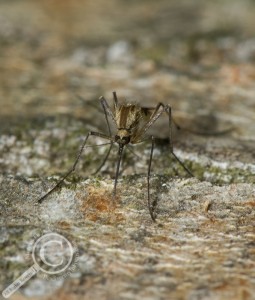
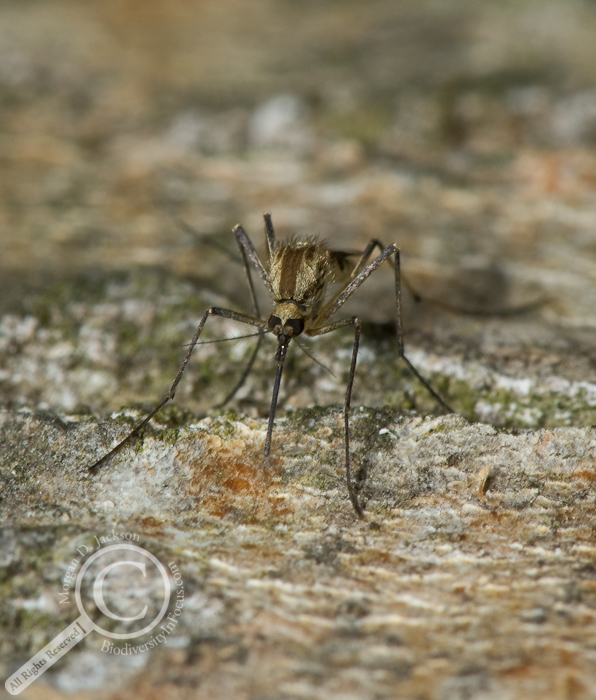
Mosquito sitting on log in Ontario

Time to start ID'ing my Nematocerans, like this Mosquito (Culicidae)

Vol. 2 – Keys to genera for each of the following; Aschiza (Syrphidae – flower flies, Phoridae – scuttle flies, Pipunculidae – big-headed flies, etc), Calyptratae (Muscidae – house flies, Calliphoridae – blowflies, Tachinidae, Sarcophagidae – flesh flies), and most importantly the Acalyptratae (Micropezidae – stilt-legged flies, Tephritidae – fruit flies, Drosophilidae – vinegar flies, Sphaeroceridae – lesser dung flies, Ephydridae – shore flies, etc)
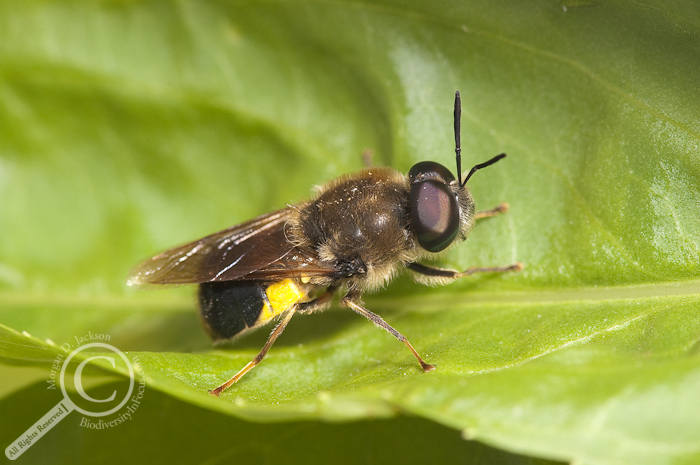
Soldier flies are your's to discover, like this <i>Stratiomys adelpha</i>

Soldier flies (Stratiomyidae) are your's to discover, like this Stratiomys adelpha

Vol. 3 – Phylogeny and classification of the Diptera

You can download your copy of the Manual here, and while you’re there check out some of the other titles that have been made available as well, including most of the Canadian Handbook Series, detailing some of the major insect and spider groups found in Canada! Thanks to the folks at Agriculture and Agri-Food Canada and the Canadian National Collection of Insects, Spiders, and Nematodes, and the Entomological Society of Canada for making this possible!

* – all genera as of the late 1980’s that is, there have been a few changes since then, but this will still give you a great headstart