May 172011
 
Ryan Fleacrest

Ryan Fleacrest sometimes hangs with Michael Bubonic

Normally I have a bit of fun with Tuesday Tunes, whether mocking sugary pop music or giving props for mad entomological rhymes. Today however, I want to share a few trends which are both topical and disheartening (don’t worry, I still have a great song for you at the end of the post).

Last week, a report came out of Vancouver in which doctors reported bed bugs harbouring antibiotic resistant bacteria (Staphylococcus aureus [MRSA] and Enterococcus faecium [VRE]). While it’s a scary proposition, it’s unknown whether the bed bugs are capable of transferring the bacteria at this point. As Jonathan Eisen points out, it shouldn’t be too much of a surprise that MRSA was found; bed bugs are ectoparasites and MRSA is primarily a skin/wound-related infection. In fact, bed bugs have never been shown to transmit diseases (bacterial or viral) despite plenty of research attention, and as far as I can tell, have never been implicated in a human death. More people have died from improper handling and use of pesticides intended to kill bed bugs than from the bed bugs themselves!

Continue reading »

May 112011
 

A few days ago I was walking through the University of Guelph Arboretum taking some down time and trying to get back into the photography groove when I noticed a peculiar sight…
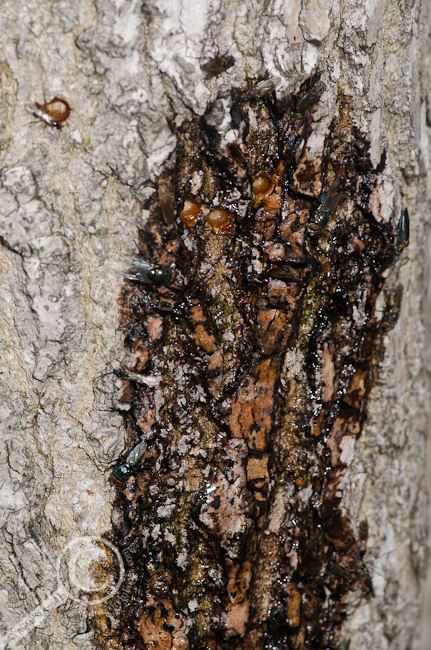
 

Tree weeping sap covered in insects

The trees were weeping, and dozens of flies were lapping up the sweet, sweet tears! Since there were several of these patches on two nearby trees (my tree bark ID skills are severely lacking, I’m a leaf man) and the wet marks were 4 to 10 feet off the ground, I felt it was a safe guess that it wasn’t a territorial marking (unless the UofG men’s basketball team was having a summer camp…), and last I checked I wasn’t in Fangorn Forest, so I did a little detective work to discover the story behind the sadness.

Closer inspection revealed these curious holes:
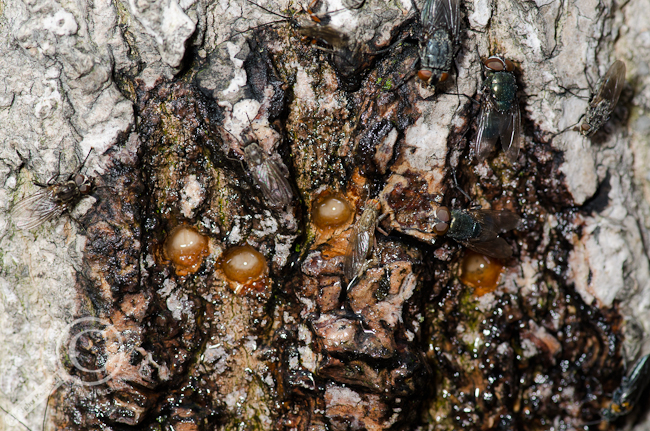
Yellow-bellied Sapsucker holes drilled into tree bark

My first thought was to scan for long-horned beetles (Cerambycidae) or perhaps metallic jewel beetles (Buprestidae), but after seeing nothing but flies and wasps, I took a closer look and noticed that the holes only pierced the bark, and not the xylem (aka sapwood). It dawned on me that what I was looking at was a tricky, sticky lure set by a bird I’d seen plenty of times before in the Arb; the Yellow-bellied Sapsucker (Sphyrapicus varius). This crafty woodpecker will cause superficial injuries to a tree, and then sit back while the sap flows free. The bird will then return to the tree and pick off the insects which are feeding on the sap, as well as some of the sap itself! Clever bird…

Pretty cool biology, so I took the opportunity to see what sort of insects were at risk of becoming an early spring brunch for the hungry sapsucker.

I observed a few butterflies when I first approached the trees, but they quickly flitted away, not to return while I was there. I’m by no means a Leper (i.e. a Lepidopterist), but I think they may have been Red Admirals (Vanessa atalanta, Nymphalidae), which are one of the earlier butterfly species to be found in Southern Ontario.

There were a number of hymenopterans taking advantage of the Saturday afternoon bounty including many Ichneuomoid wasps and this fuzzy female:
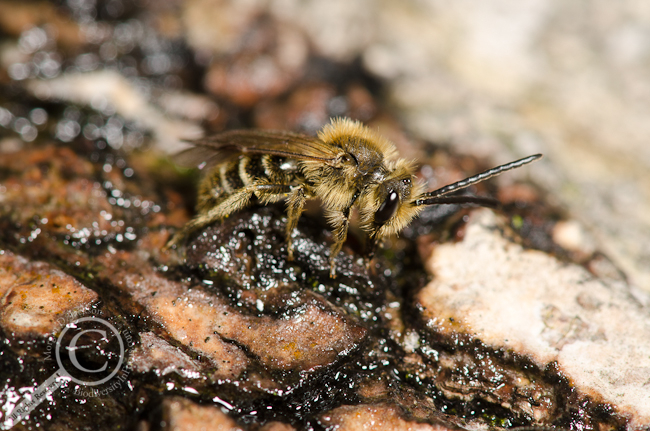
Andrenid bee eating tree sap Andrenidae

This andrenid bee (Andrenidae) seemed quite content to sit and lap up the sugary sap running down the tree bark, not caring when I moved in and out trying to get a decent photograph of it’s amazing hairdo.
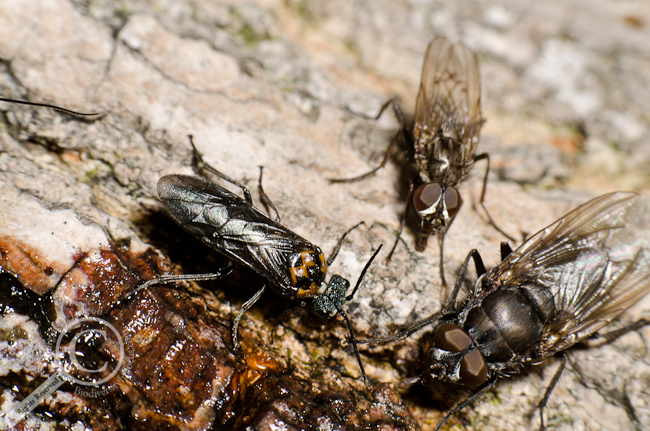
Tenthridinidae wasp eating tree sap with a calliphoridae and muscidae fly

While the bee was busy enjoying a solitary meal, this sawfly (Dolerus unicolor, Tenthredinidae) was more than happy to share the sap with a couple of calyptrate flies (a blowfly [Calliphoridae] on the right and what I believe to be a Muscidae at the top). In fact, the calyptrates made up the vast majority of the insects visiting the tree, in some places packed so tightly you couldn’t see the tree for the flies!
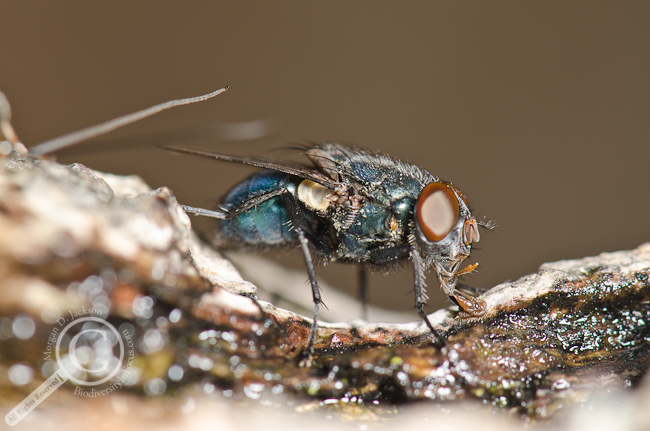
Blow fly Calliphoridae sponging up tree sap

The sponge-like mouthparts found in many calyptrates are well demonstrated in this blowfly (Calliphoridae, possibly subfamily Chrysomyinae). You can see the maxillary palpi sticking straight ahead as the membranous labrum and associated sclerites mop up any residual tree sap on the bark.
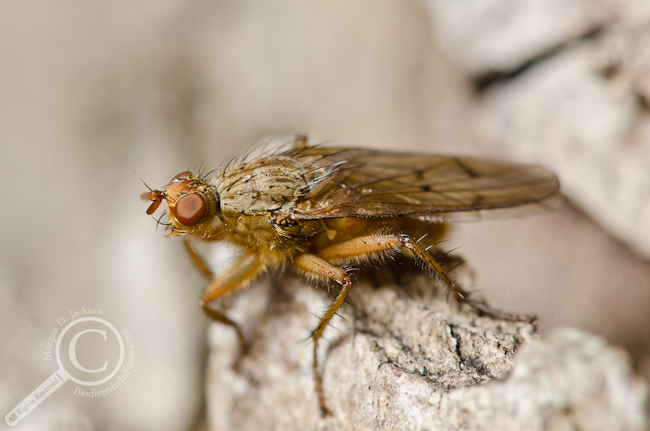
Scathophaga sp. Scathophagidae

Another, lesser known calyptrate family was also making an appearance; the Scathophagidae. I could make out what looked to be two species of scathophagid, including this Scathophaga sp. perched nearby awaiting its turn at the sugar shack.
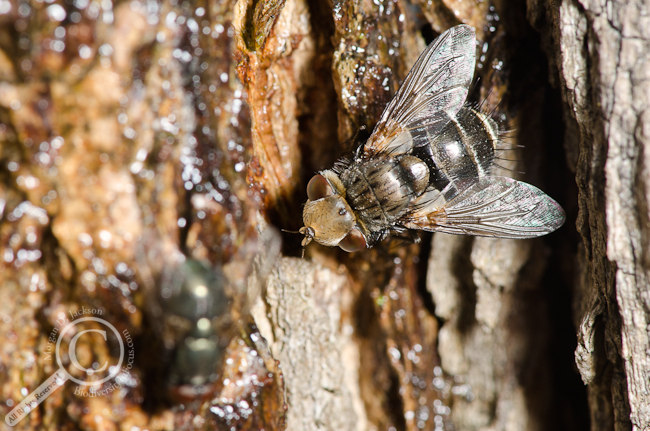
Tachinidae fly on tree drinking tree sap

Not everything went according to plan on this outing however, as I made a major n00b move – I forgot to pack specimen vials! While normally I’d have a dozen or so snap-top vials in my camera bag in case I ran into something which needed to be examined at a later date and added to the University of Guelph Insect Collection, after transferring my photo equipment into my new camera bag (courtesy of the best wife ever), I neglected to throw in the vials! The first rule of entomology (besides “ALWAYS talk about entomology”) is to collect the damn specimen, and as luck would have it, I came across a fly which I instantly wanted to collect (pictured above & below).
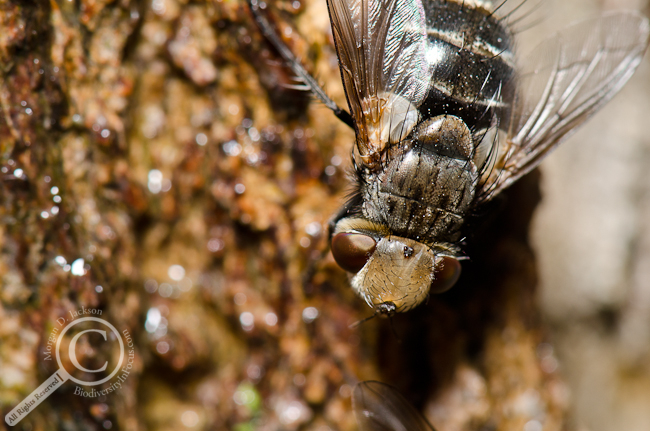
Tachinidae with tree sap fly

This Tachinidae caught my eye right away, and after several attempts, I managed to get a couple of decent images. Unfortunately, tachinid flies are one of the most diverse groups of animals on the planet, and the specimen would be vital in identifying it to the genus or subfamily level on my own. A lesson learned, and needless to say I threw a couple of vials in my bag as soon as I got home!

After getting my fill of photos and not having any means to collect some specimens, I decided to pull back and let nature take it’s course. While I never saw the sapsucker, I certainly appreciated the opportunity it created, allowing me to photograph a great diversity of flies and wasps!


Tuesday Tunes – La Cucaracha

 Fun Stuff, Insects, Pop Culture, Tongue in Cheek, Tuesday Tunes  Comments Off on Tuesday Tunes – La Cucaracha
May 102011
 

Ryan FleacrestIn honour of the Latin American celebration of Cinco de Mayo, I bring you an iconic entomological song that most people will instantly recognize! While the original lyrics were about a disabled cockroach, this song became popular during the Mexican Revolution, with people creating their own lyrics to mirror their political ties. The original lyrics however are pretty fun:


Spanish English
La cucaracha, la cucaracha, The cockroach, the cockroach,
ya no puede caminar can’t walk anymore
porque no tiene, porque le falta because it doesn’t have, because it’s lacking
las dos patitas de atrás. its two back legs.

(Lyrics courtesy of Wikipedia)

I’ve seen many insects which are lacking legs and still mobile, so it’s a little odd that these are the lyrics which started it all. As many urbanites may attest, killing a cockroach is not the simplest task and urban legends maintain that cockroaches will inherit the world following a nuclear holocaust. Perhaps we’ve just been taking the wrong approach this whole time, and removing the back legs is all that’s needed to stop these household pests!

Certainly a catchy tune, and one I’m sure will be infesting my head for the remainder of the day!


This song is available on iTunes – La Cucaracha – Mexican Fiesta


Spanish English
La cucaracha, la cucaracha, The cockroach, the cockroach,
ya no puede caminar can’t walk anymore
porque no tiene, porque le falta because it doesn’t have, because it’s lacking
las dos patitas de atrás. its two back legs.

Key to World Genera and NA Species of Clusiidae – CJAI Vol. 14

 Cool Science, Natural History, Publication, Review  Comments Off on Key to World Genera and NA Species of Clusiidae – CJAI Vol. 14
May 042011
 

The latest volume of the Canadian Journal of Arthropod Identification was published today, and it’s one of the most visually compelling keys published so far! Allowing you to identify all the world’s genera of Clusiidae as well as the species found in North America, this new key provides plenty of fantastic photos, an awesome layout and functionality, and something not yet utilized in CJAI papers, a Lucid™ Matrix key. While I’m personally not a fan of Lucid™ products in particular, matrix keys provide users an open-ended path to identification, increasing the chances of a correct identification.

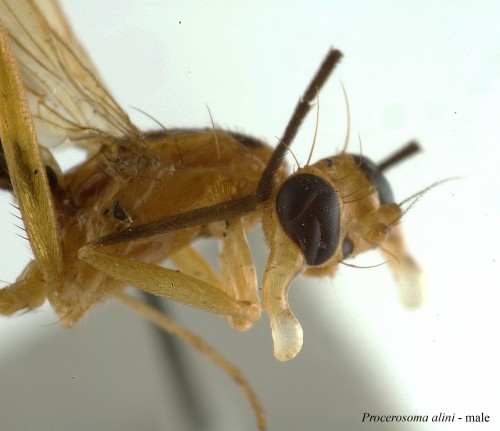
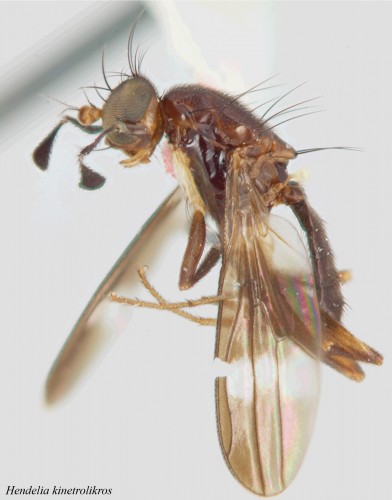
While clusiid flies aren’t necessarily the most frequently observed flies, they are nonetheless fascinating, featuring some incredible behaviours. One of the few acalyptrate families to defend lekking territories, males will take up residence on sunny stretches of logs or dry forest floors and battle with other males for prime areas. Check out the battle gear on these two males:

Procerosoma alini male head - Lonsdale et al 2011

Procerosoma alini male head - Lonsdale et al 2011

Hendelia kinetrolikros - Lonsdale et al 2011

Hendelia kinetrolikros - Lonsdale et al 2011


Continue reading »

Tuesday Tunes – Buzzin’ Fly – Tim Buckley

 Fun Stuff, Insects, Life as a Grad Student, Pop Culture, Tuesday Tunes  Comments Off on Tuesday Tunes – Buzzin’ Fly – Tim Buckley
May 032011
 

Ryan FleacrestOne of my favourite entomological newsletters was published today, and to celebrate I’m going back to a fly-themed song. I’d highly recommend checking out “Fly Times”, the biannual newsletter of the North American Dipterists Society (affectionately known as NADS), where you can find all manner of interesting news from the Dipterological community, buzzing with stories from the field, research news, and all manner of articles involving flies and the people who study them.


In other Dipteran news, I’ve completed all the requirements for my MSc and am officially the proud owner of a shiny new graduate degree in Diptera systematics! This means that my blogging schedule will pick up again, with multiple posts each week and some big ideas for the near future. Thanks for sticking with Biodiversity in Focus during this busy period!


This song is available on iTunes – Buzzin’ Fly – The Dream Belongs to Me – Rare and Unreleased Recordings 1968/1973

The Art of Birds

 Art, Nature, Photography  Comments Off on The Art of Birds
Apr 262011
 

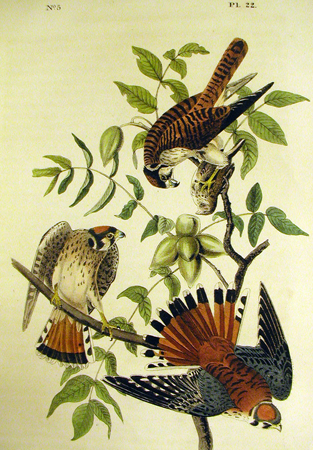
Today is the birthday of one of the most influential natural science artists; John James Audubon (1785-1851). Known for his illustrations of North American birds in natural settings as well as natural history notes for each, Audubon influenced many generations of naturalists, including Charles Darwin. My grandparents hung two large reproductions of plates from his Birds of America series in our family cottage, and they are some of my earliest memories regarding art.

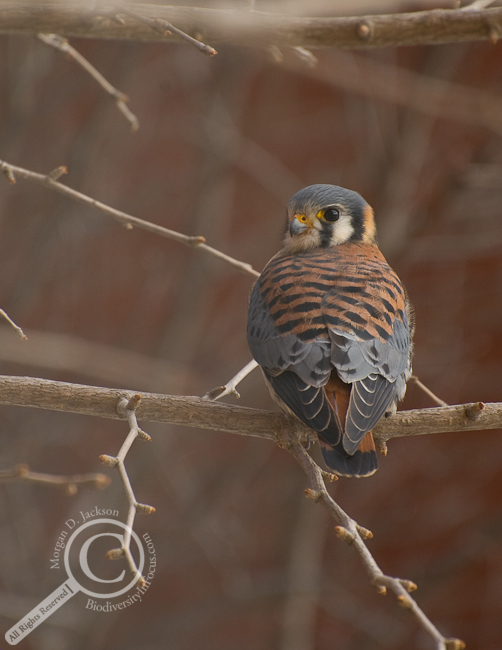
As an homage to John James Audubon, I thought I’d share a photo of the American Kestrel.

American Kestrel in tree with red brick background

American Kestrel - Falco sparverius


Audubon included this species in his account, and it’s one of my favourite images.

The American Sparrow Hawk - John James Audubon


Thanks to John James Audubon there are a lot more people interested in the natural world. If you’ve been inspired by his work, why not make a donation to the National Audubon Society as a birthday present!

Must click – Google’s tribute to Audubon

Tuesday Tunes – The 17-Year Cicada – Sleepytime Gorilla Museum

 Fun Stuff, Insects, Tuesday Tunes  Comments Off on Tuesday Tunes – The 17-Year Cicada – Sleepytime Gorilla Museum
Apr 262011
 

Ryan FleacrestThe internet and the Midwest are all a tizzy over the pending emergence of this year’s 13-year cicada brood (brood XIX if you’re interested). These periodical cicadas go more than a decade living underground feeding on the sap of tree roots, only to emerge en mass to partake in a massive jam session/rave/orgy. Different years feature different broods emerging in different areas and composed of at least 1 of the 4 different 13-year cicada species (leading to some interesting questions regarding what’s a brood and what’s a species when there is hypothetically little gene transfer between broods). On top of the 13-year cicadas, there are 3 species of 17-year cicada, of which brood I is expected to emerge next year.

These insects with prime emergences serve as the undivisible subjects of a song which some might consider a little odd.


This song was actually the inspiration for the Tuesday Tunes feature and was the first song I added to my playlist. Someday I hope to witness and photograph a magicicada emergence first hand, but for now I’ll have to count on those near the epicentres to share this emergence!


This song is available on iTunes – The 17-Year Cicada – Of Natural History

Apr 192011
 

Ryan FleacrestIt’s been brought to my attention that I’ve missed a Canadian musical icon: the sweet dulcet tones of  Stompin’ Tom Connors! Most may know him for his Hockey Song, but when he’s not singing about sports or condiments, he’s paying an homage to those pesky bugs.


Stompin’ Tom really is one of the great lyricists, with some truly fantastic songs. The Bug Song is right up there, and bound to buzz around your head for another day or two at least, despite the rather negative tone towards our six-legged friends!


This song is available on iTunes – The Bug Song – Stompin’ Tom Connors and the Moon Man N****e