Nov 212011
 

Ryan FleacrestFrom last week’s ESA meeting, you’d think that ants were all powerful and super diverse or something by the number of people talking about them and the level of excitement surrounding those talks! You might say people were going ape over the empire of ants…


Ya, that was a pretty horrible reference. But the thing about ant enthusiasm and the large number of talks about a single family wasn’t hyperbole!


This song is available on iTunes – Empire Ants (feat. Little Dragon) – Plastic Beach

Tuesday Tunes – All My Friends Are Insects – Weezer

 Fun Stuff, Insects, Pop Culture, Tongue in Cheek  Comments Off on Tuesday Tunes – All My Friends Are Insects – Weezer
Nov 152011
 

Ryan FleacrestSince I’m here at ESA 2011 and becoming reacquainted with old friends and meeting all sorts of new people interested in insects, I thought it was only fitting to share this short song from Weezer! We’ll forgive the slight transgression about earthworms being insects for now, but Rivers Cuomo best watch his taxonomy in the future!

Don’t be afraid to go out and make an insect/entomologist friend of your own this week!


This song is available on iTunes – All My Friends Are Insects (Bonus Track) – Hurley (Deluxe Version)

ESA Day 3 – The Student Sessions

 Cool Science, Entomology, Life as a Grad Student, Meeting, Trip Report  Comments Off on ESA Day 3 – The Student Sessions
Nov 152011
 

Today was a bit of an oddity for a large meeting; the morning was chalk full of talks and poster presentations, but absolutely no scientific content all afternoon, but rather full of societal business meetings. This means I ran around like mad all morning and then sat on my hands all afternoon, so it’ll be a bit of a light review today.

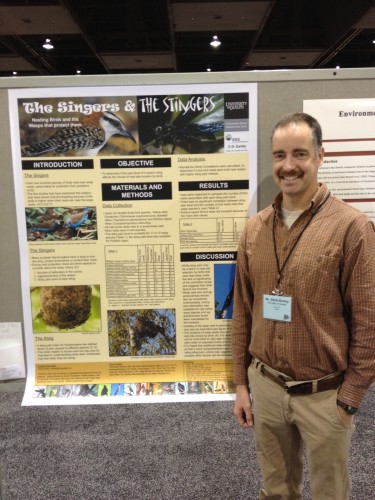
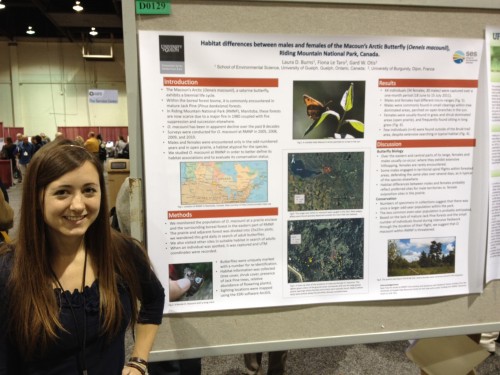
As I mentioned, all of the student talks were this morning in order for the President’s Prizes to be awarded this evening. I ended up sitting in on 9 or 10 talks as well as exploring the poster session, so I was able to get a pretty good feel for the level of proficiency displayed, and was it ever high! I don’t think I went to a single talk or saw a single poster which I wasn’t inspired or awed by! Everyone seems to be doing fantastic research, whether revising Neotropical cicada taxonomy, studying the evolution of eusociality in carpenter bees, or exploring the relationships of Australian horse flies, every talk I sat in on had me entertained and curious about the hypotheses they were working on! Not only were the talks well presented, but the slides were well designed, and the research given in an understandable medium, immersing the audience in the project at hand. There was even a student describing the puparium of a North American Neriid fly (a group of flies very closely related to the Micropezidae I study)! I couldn’t have asked for a better morning of talks!

I just wanted to mention how great the new ESA Ento-2011 iPhone App is! It has allowed me to easily keep track of when and where I want to be, who’s speaking and what their talk number is, which I found to be a good way to keep track of citations on Twitter. Normally I’d need to fumble around with my big book of titles, switching pages and losing my spot while wasting valuable talk time, but the app has done an amazing job of keeping me on track and in the right room. Kudos to the ESA for developing and sharing a great tool!

Over lunch I took in the vendor displays again now that there weren’t as many people hanging around, and then looked into the ESA Career Center to see what sort of positions were available. Turns out that it’s not a good time to be looking for an entomological job or graduate position, as there were very few advertisements this year! The last time I was at ESA the binders were stuffed full of job, faculty and graduate postings, but this year there may have been 2 dozen total, with very few looking for ecologists and none interested in taxonomy. Whether this is a normal pattern and we’re in a lull, or whether this is a delayed effect of the economic downturn, I’m not sure, but it was a little disheartening. I suppose it can only get better from here, right?

After finishing up the slides for my last talk, I met with Ignasi Bartomeus (@ibartomeus), a pollination ecology post-doc at Rutgers who I’ve been corresponding with on Twitter since Sunday, to have a beer and talk insects. We had a great discussion about the value of social media for public outreach and the value of natural history collections to ecologists. It was enlightening conversation for me, and one that wouldn’t have happened had I not traveled to Reno, or hadn’t been using Twitter! Social Media for the Win again!

Finally, I met with the rest of the Cerceris fumipennis research crew for a brainstorming session on how to continue the work and discuss Wednesday’s symposium. We ended up crashing the Arkansas/Auburn/Clemson/Tennessee Alumni Reception (shh, don’t tell) and sat in the corner discussing new ideas for the next field season. If you want to see some passionate, dedicated entomologists committed to a research project they fully believe in, then you should come out Wednesday afternoon in room A12 for the Biosurveillance symposium!

Tomorrow is an extremely full day, with talks in almost every slot that I am looking forward to seeing! I’ll be taking plenty of notes, that’s for sure!

Nov 142011
 

Normally when I go to these large, multi-room conferences I stand at the back of the room so I can sneak out between talks to see plenty of different presentations, usually at the other end of the building. Today was a little different however, as I sat in one seat for the entire morning, and then did the exact same thing for the entire afternoon! And they weren’t even Diptera symposia!

This morning was the Citizen Science symposium, and featured talks by a number of different programs that are reaching out to the public to help with data collection. Projects ranged in scope from an amateur Orthopterist studying katydid biology and taxonomy in her free time, to multi-site sampling projects trying to understand the complicated interactions of caterpillar/plant/parasite communities in North America, Costa Rica and Ecuador! The number of people willing to help out with these projects, including travel to exotic locations, all on their own dime is pretty amazing. Lee Dyer of the University of Nevada, Reno even told stories of participants who became so entranced by the research they helped with, they went back to school and ended up earning advanced degrees in entomology! Also, one of them got the caterpillar she was tasked with studying permanently tattooed on her return home! That’s dedication! Overall it was a really great group of talks, and there was quite a bit of interest in my talk about how the Canadian Journal of Arthropod Identification can contribute to their projects (my talk went pretty well I think, only one major coughing fit on my behalf from this stupid cold I keep dragging around). Here are the different projects, with links when available:

EarthWatch Caterpillar/Parasitoid Life History and Tritrophic foodweb

Monarch Larva Monitoring Project

Lost Ladybug Project

BeeSpotter

BugGuide.net

John C. Carlson – Passive surveillance in medical entomology using BugGuide

Mark Fox, Tulane University – Using internet images to track a new species of Caloptilia (Lepidoptera: Gracillaridae) specializing on Chinese tallow


After a quick lunch with the Citizen Science crew, I headed back to the conference centre and took in the Myths, Misconceptions and Mental Modifications symposium. Designed to help dispel some of the myths surrounding insects by encouraging greater public outreach, this symposium was full of entertaining speakers who taught me all sorts of new things to put to use here on the blog! Marianne Shockley Robinette (@DrBugAppetit on Twitter) started it off with a great talk highlighting some common insect myths people should be forgetting, and included a whole range of cool insects in pop culture. Next, Martha Lutz held a really interesting little seminar complete with handouts and group discussion on how to help change people’s preconceptions about insects, using a technique she called the “criticism sandwich” – tell the person something good about what they think, correct the part they were incorrect about, and then finish with more encouragement for something they were right about. She also suggested using metaphors for explaining complex insect biology, like the effect temperature has on insect growth and development, by comparing to humans. For the temperature example, she would explain that if humans reacted to temperature like insects, you could heat up a 2 year old to get through those terrible twos more quickly, cool them down when they reach the fun stage where they listen to you and are interested in what you do so it lasts longer, then throw that temperature way up when they hit their teens and think they know more than their parents to get them out of the house in a hurry! Pretty brilliant way to relate a complex phenomenon in terms any parent could understand!

Richard Hellmich was next and discussed how media-induced hoopla can hamper research programs, specifically with regards to genetically modified plants. It’s really unfortunate that a few uninformed media instigators can have such a detrimental effect on public perception, but that is the reality we live in and something that all entomologists should be on the lookout for, no matter what their research may be on! My talk on using social media to perform and promote entomology research seemed to go over well, and I was pleasantly surprised to see a large number of people in the audience already using social media!

The final 3 speakers provided some really fantastic information on dealing with the media, and how to be an effective outreach researcher. Michael Raupp, who’s appeared countless times on national TV and radio segments, shared a bunch of tips on dealing with the media, and how to get your message across in an entertaining fashion. He was followed by Holly Menninger (@DrHolly on Twitter) who shared even more great tips on how to prepare for a media engagement and getting your message out there without getting lost in the dazzle of pseudo-celebrity! One of the more important points I took away from her talk were her 5Ps for dealing with the media: Prior Planning Prevents Poor Performance! That pretty well goes for any aspect of academia I suppose, but most of the time your poor performance because of poor planning isn’t immediately showcased to the public the moment it happens! Finally, Richard Levine got up and talked about dealing with difficult situations in the media and with the public. With his experience as media consultant for the ESA, he had plenty of examples on how to deal with rogue journalists (see Tucker “Douche Bag” Carlson hijack Anthony Cognato of the Michigan State Entomological Collection and read his response) or misinformed citizens. Overall it was a great conference, and if I hear of the talks being collated and posted anywhere, I’ll be sure to pass along that info!

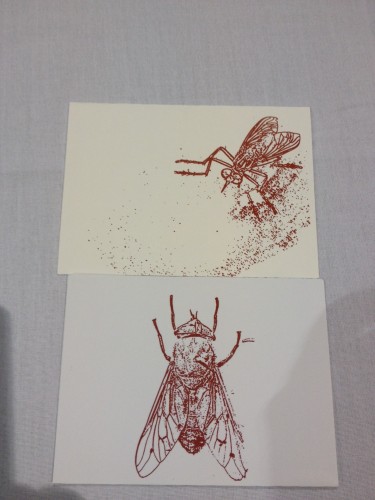
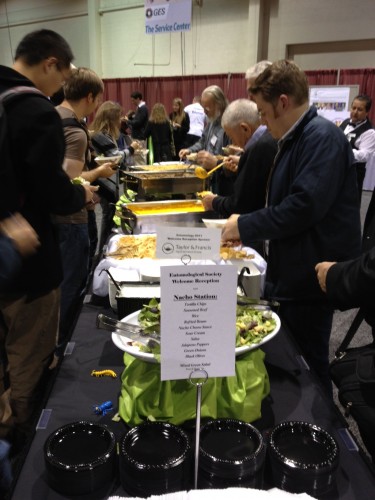
This evening I took in the Opening Mixer for the free food and an uninterrupted perusal of the vendors was pretty good. Check out some of the photos below, including a rather embarrassing taxonomy fail considering where I am… Overall, it was great start to the conference, and I can’t wait to see what the rest of the week has in store for me!

Nov 132011
 

The true ESA conference doesn’t start until tomorrow, but today marked the start of the Entomological Collections Network meeting. This is where curators and researchers of natural history collections come together and discuss new ideas or trends in the maintenance and advancement of insect collections.

The morning session was largely focused on the different programs available for specimen databasing, highlighting the similarities and advantages for a variety of different programs and testimonials from users. Ranging in price from free to several thousand dollars per year, these programs all do largely the same thing, with some room for customization depending on the curators preferences. If you’re looking at starting your own collection and are anticipating it to include many thousands or millions of specimens, then this was the symposium for you!

The afternoon started off with discussions of a relatively new movement in the insect collections community; mass imaging and digitization of specimens. By using a variety of technologies and even more databases, many institutions are striving to make virtual representations of their holdings available online so people can explore and utilize data remotely. You can learn more at the following websites:
InvertNet
NCSU Insect Collection

The North Carolina State University Entomology Lab is also running a survey to learn how entomologists and those interested in insects use the internet. You can take the survey here.

The final session of the day revolved around the practice of specimen loans, and about those researchers who may be a little slow with repatriating loaned specimens! These 4 talks were some of the most entertaining talks I’ve heard in awhile. Victoria Bayless from the Louisiana State Arthropod Museum started it off by classifying loaners from the hoarder who returns nothing and who can’t bring themselves to part with borrowed specimens to the lazy loaner who couldn’t be bothered, to the saint, the researchers who return loans promptly and include flowers! Mike Ferro also briefly discussed a new idea of a community loan wiki, showing who’s borrowed what from where. It looks like a pretty neat idea which has a lot of potential if accepted by the taxonomic community!

Next, Peter Oboyski of the Essig Museum of Entomology at Berkeley discussed some potential policies for dealing with loan requests where material will be used for molecular analyses. He made some excellent points regarding the potential destruction of specimens and how collections should demand GenBank Accession numbers for sequences from their specimens (to attach to the specimen database entry) and also raw genomic DNA if they have the facilities to properly store it.

We next heard from a confessed loan scofflaw, Zack Falin of the University of Kansas Insect Collection, who offered up some reasons why someone might not be the perfect loaner.

Mike Ivie, the curator of entomology at Montana State University finished up the session by discussing how we should all prepare our loans for the “bus” situation. This is literally a situation where a researcher dies suddenly (ie hit by a bus) leaving their loans behind for colleagues or family to sort out and return. It was certainly an excellent reminder to properly label my own loans, although it was a bit sobering hearing some of his tales of dealing with these situations himself.

A decent banquet meal with plenty of interesting discussion with other Dipterists and a few Neuropterists rounded out day 1.

The big show starts tomorrow, and I’ve got to put the final touches on my presentations for the day. Looking forward to some good talks tomorrow!

Nov 082011
 

Entomological Society of America 2011 Annual Meeting LogoAs I mentioned yesterday on Tuesday Tunes, I’m heading West this weekend to partake in the Entomological Society of America Annual Meeting in Reno, Nevada. Besides marking my first time in the Pacific Time Zone, this conference will also be the first time I’ve given a triplet of talks at a conference, as I’ve been invited to give 3 talks in 3 different symposia! Chronologically, here’s my talk schedule:

Sunday Nov. 13Citizen Scientists in Entomology Research (Room A2, First Floor)

11:35-11:55 — “CJAI & citizen science – putting the “public” in publication” – M.D. Jackson & S.A. Marshall
CJAI LogoAbstract: The Canadian Journal of Arthropod Identification (CJAI) is dedicated to providing high- quality, peer-reviewed identification aids to allow naturalists of all levels access to North America’s biodiversity. With papers published by both funded and unfunded professionals and shared online as 100% open access, CJAI has been referenced by scientists around the world, and has assisted countless “amateurs” in identifying specimens and photos. In the information age, CJAI unlocks the gate to biodiversity and democratizes the identification of insects and arthropods around us. Examples of published and upcoming publications and the impact they are expected to have will be presented.

Here’s a little announcement for you; I’m the new Technical Editor for the Canadian Journal of Arthropod Identification, where I’ll be taking over from Dave Cheung as he moves on to a new job in Copenhagen! He’s left some pretty big shoes to fill, but I’m really looking forward to contributing to the running of the journal, and will be discussing how CJAI is a great resource for citizen science projects. Also, expect plenty more info on CJAI coming up in the near future here on the blog!

 

Biodiversity in FocusSunday Nov. 13Myths, Misconceptions, and Mental Modifications: Identify, Clarify and Speak Out about Entomology (Room A13, First Floor)

14:50-15:05 — “The Social Entomologist: How connecting with social media can benefit your research program” – M.D. Jackson

This is a similar talk to the one I gave at the Entomological Society of Ontario AGM a few weeks ago (which was a great meeting and something I’ll write about soon), where I’ll be discussing the power of social media for entomology research and discussing how you can incorporate social media into your project. This is a topic which I find really interesting, and hope to do a week-long series of posts shortly after my return from Reno to share and expand on some ideas I have!
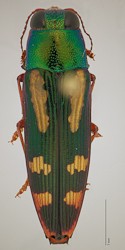
 

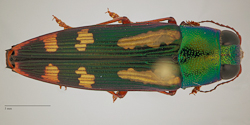
Buprestis rufipes Buprestidae Jewel BeetleWednesday Nov. 16Biosurveillance: Using a Native Wasp Cerceris fumipennis to Find Emerald Ash Borer and Other Species of Buprestidae (Room A12, First Floor)

16:30-16:50 — “A Field Guide to Northeastern Jewel Beetles: Identifying the prey of Cerceris fumipennis including both native and invasive species of Buprestidae” – M.D. Jackson, S.M. Paiero, & A. Jewiss-Gaines

This is a project I’ve been working on for over a year now and which I’ve been unable to publicly discuss until now. Myself, Steve Paiero and Adam Jewiss-Gaines, in collaboration with the Canadian Food Inspection Agency, are putting the final touches on a massive field guide to the Buprestidae of Northeastern North America, which should be in print  in early 2012! With over 450 pages of colour illustrations, this field guide is designed to allow forestry professionals, border inspection agents, researchers and naturalists alike to recognize these beautiful yet economically important beetles, and features some stunning images and identification resources which I’m very proud to be a part of! Again, I’ll be sharing plenty more information here on the blog regarding the field guide, and hope to start showcasing some of these beautiful beetles which are found in our own backyards!


Between my talks I’ll be running around like a mad man trying to take in as many presentations, posters and other events as I can. Here are a couple I’m especially looking forward to:

Mon. Nov. 14 – 11:03-11:15 — Descriptions of Glyphidops flavifrons (Bigot) (Diptera: Neriidae) – Charity G. Owings

Tue. Nov. 15 – 9:40-10:00 — Design and development of web-based identification tools for wood boring beetles: a case study – Eugenio H. Nearns

Tue. Nov. 15 – 10:00-10:20 — A traditional taxonomists view on modern web-based insect identification — Charles O’Brien

Tue. Nov. 15 – 15:35-15:50 — Sharing the wonderful world of insects via the internet – Brett R. Blaauw

Tue. Nov. 15 – 17:05-17:20 — Operation global insect media domination: the adventures of Bug Girl – Bug G. Membracid


When I find a moment to breathe I’ll be checking on the multiple poster sessions (there are a bunch of Guelph students sharing their work this year) as well as scoping out the vendors, job bank and pretty well anything else I happen to wander into! And guess what! I’m taking you all with me, digitally speaking. I’ll be doing much the same as I did for my trip to Costa Rica last summer, providing a nightly report of the day’s activities, but I also hope to tweet my way through the conference as well, sharing all sorts of interesting insect news and science with you! If you’ve considered joining Twitter, perhaps this would be a good time to do so, just don’t forget to follow me @BioInFocus!

After the meeting concludes, a friend and I are going to take a mini road trip to do some exploring, so hopefully I’ll have plenty of new photos to share on my return.

It’s shaping up to be a crazy week, but I’m excited to take it all in, and I if you’ll be in Reno make sure to say hello!

Tuesday Tunes – Butterflies – Stereos

 Fun Stuff, Insects, Pop Culture, Tuesday Tunes  Comments Off on Tuesday Tunes – Butterflies – Stereos
Nov 082011
 

Ryan FleacrestWell, it’s been awhile since the last sugar pop edition of Tuesday Tunes, so I guess now’s as good a time as any.

Proudly Canadian, the Stereos share that feeling of gastric unease in Butterflies.


Speaking of gastrointestinal Lepidoptera, I’ll be traveling to Reno, NV this weekend to take part in the Entomological Society of America Annual Meeting. It’s going to be a busy week for me, and I’ll be sharing my schedule with times for my talks, what I’ll be talking about and some of the other events I’ll be looking forward to tomorrow! So watch next week when I hope to be active sharing the experience with all of you, here on the blog and on Twitter (where you can follow me @BioInFocus).

Nov 042011
 

I’m not the most fashionable guy, but I love me a good graphic T-shirt, especially if it’s got an insect in the design. I’ve accumulated a fairly decent collection of shirts featuring all manner of insects and other nature nerdery, and proudly wear them each day to work/meetings/conferences/family functions/etc. A simple style, sure, but they usually get a smile out of people, and they’re super comfortable!

Which is why I absolutely LOVE a new campaign by the good people at Threadless.com (my favourite T-shirt vendor),  UNICEF, and New York artists Justin & Christine Gignac to raise money for humanitarian aid in the Horn of Africa.

It’s simple; make a donation to UNICEF to cover the exact cost of an aid item, and receive a cool t-shirt with the item you donated on the front. For example, donate $18.57 to cover the cost of an insecticide-treated mosquito net used to prevent Malaria transmission, and you’ll receive this entomologically AWESOME t-shirt!

Can you say win? 100% of the donation goes directly to UNICEF and is converted into the item you donated, and there is a wide variety of items you can donate, ranging in price from $18.57 for the mosquito net to $300,000 for a cargo flight full of relief. To sweeten the pot for a limited time, Threadless will ship you your shirts for free (even internationally) if you spend more than $50! So for $54 you could provide 3 families with a safe place to sleep free of mosquitoes carrying Malaria, Dengue Fever or other deadly diseases, you get a really cool T-shirt for yourself and 2 others to give away to those hard-to-buy-for entomologists on your Christmas shopping list (trust me, they’d love this)!

Check out the video below further explaining the project, and then click over to Threadless.com to donate today!


Good Shirts for the Horn of Africa from Threadless.com on Vimeo.

Good Shirts do good. The design on each shirt symbolizes the type of aid UNICEF is delivering in the Horn of Africa. 100% of your donation will go to the U.S. Fund for UNICEF to support life saving relief efforts for children. Good Shirts is a collaboration between UNICEF, BBH New York, and Threadless. Illustrations by Christine and Justin Gignac.

http://www.Threadless.com/UNICEF

Nov 012011
 

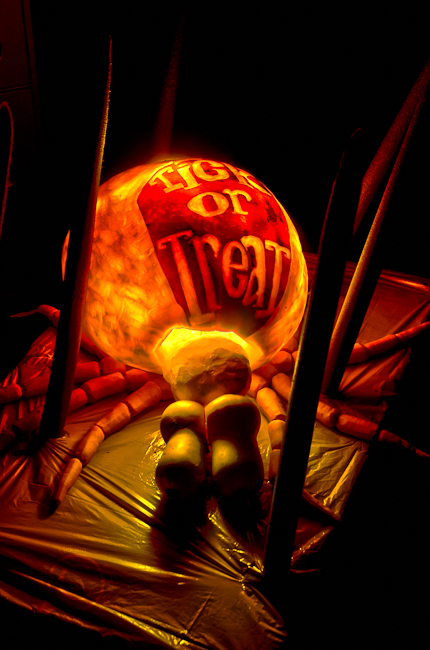
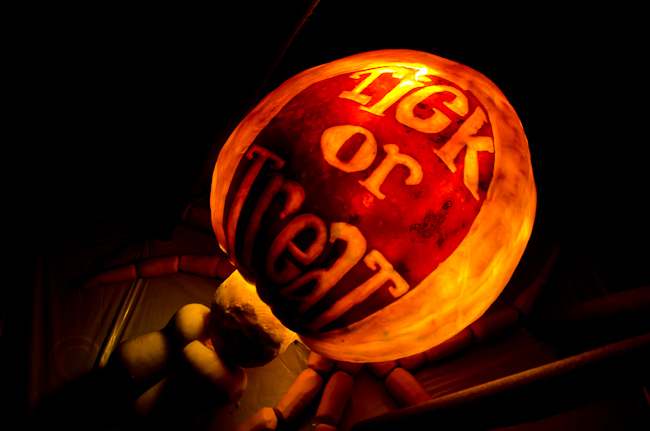
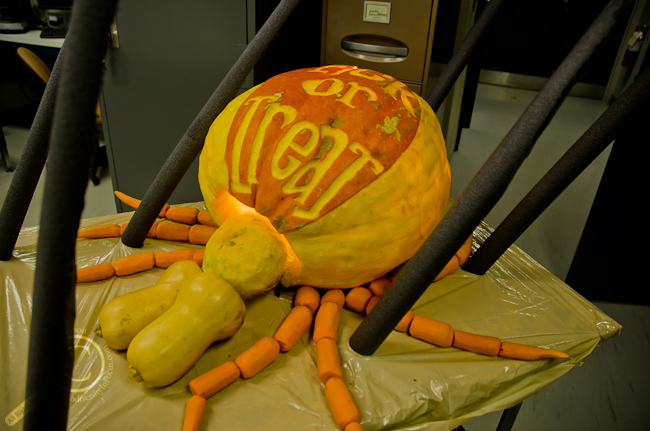
Remember when I told you ticks were pretty well my worst nightmare? Well with this year’s Ent-O-Lantern, you might start feeling the same…

Tick jack-o-lantern pumpkin Halloween

Tick pumpkin Jack-O-Lantern

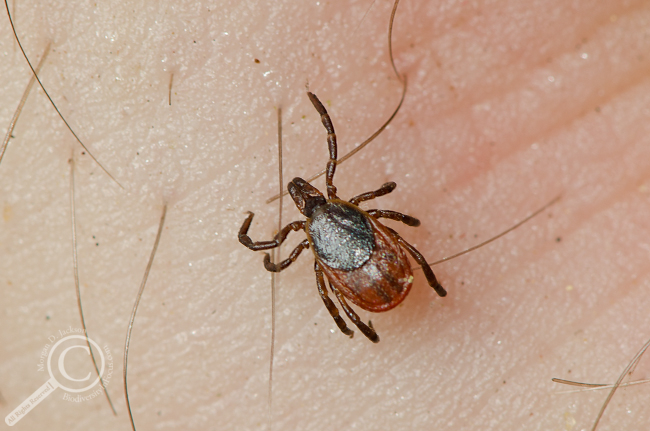
Modeled after the Deer Tick (Ixodes scapularis), this tick isn’t likely to transmit Lyme Disease, but you might lose a kidney as it burrows into your back.

Deer Tick Ixodes scapularis

Deer Tick Jack-O-Lantern Pumpkin

With squash capitulum (head), butternut squash hypostome (mouthparts), carrot segmented legs, and feeding amongst pipe insulation hairs, this year’s pumpkin will hopefully stick deep inside your psyche and instill a year’s worth of nightmares until we can bring you an all new creation! Happy Halloween!

Thanks to all the U of G Insect Systematics lab members for help carving and suggestions on how to make it come together!
Nov 012011
 

Ryan FleacrestWell, it’s the day after Halloween (commonly referred to as November 1st) and what better song to accompany the tossing of Jack-o-Lanterns to the curb than something by the Smashing Pumpkins? Another 90’s hit that I remember quite fondly from my formative years, Bullet with Butterfly Wings doesn’t really have much to do with insects beyond the title, but with reference to vampires and plenty of rats, it’s a pretty decent Halloween song (complete with creepy zombie-like miners).


And speaking of Smashing Pumpkins, stay tuned later today for the big reveal of our lab’s annual Ent-o-Lantern!


This song is available on iTunes – Bullet With Butterfly Wings – Mellon Collie and the Infinite Sadness