The wife and I took a weekend off last month and headed down to Chicago to visit a friend, take in the sights, and enjoy a bit of a break. I must say that Chicago was one of the coolest big cities I’ve been to, with great architecture, plenty of great food (including the best pizza ever), and a first class entomological exhibit!

The Romance of the Ants

Yep, that's a live ant colony within the title sign, a great way to start an exhibit!


The Chicago Field Museum is currently exhibiting “The Romance of Ants“, which follows the life and career of resident myrmecologist Dr. Corrie Moreau. I had the chance to hear Dr. Moreau discuss her research during a recent visiting scientist seminar here at Guelph, so it was great to see and read about her career path. Did I mention that her entire entomological life was illustrated as a comic book? Because it is, and it is awesome!

Dr. Corrie Moreau in Comic Form

The formicid scent trail leads through an excellent comic

Girl Power followed by an Ant Phallus

You might recognize some familiar ant photos from the entomological blog-o-sphere: sprinkled between the comic frames were huge reproductions of Alex Wild’s fantastic photographs. The huge printing of these photos looked great, and really added to the feel of the exhibit by making you feel as if you were a part of the colony!

Art & Science as one

Art & Science as one


Overall it was a great exhibit, but I worry its position in the museum will cause a lot of people to miss it. Located in a dark corner room which looked like an old Western saloon on the outside, we were the only two in the exhibit for the entire 15-20 minutes it took to take in. The museum wasn’t overly busy despite being a Saturday morning, but there were quite a few people who I saw walk straight on by without recognizing that a great blending of science and art was lying only a few feet away (kind of like ants in everyday life). The exhibit is scheduled to run through the end of 2011, so if you’re in the area, I’d highly recommend checking it out!

I played tourist this trip and tried my hand at some architectural photography while we walked around town. Downtown Chicago features some really amazing architecture and sculptures, which made my attempts a little easier. It’s certainly a different style of photography than I’m used to, but it was great getting a few clicks in again!

Cloud Gate - Chicago IllinoisThe Cloud Gate statue providing a window through the clouds Chicago Illinois


Chicago High Rise at SunsetThe Nightline through the Bean

Share
Lunar Eclipse, Feb. 2, 2008

EXIF - 1.6 sec, f/5.0, ISO 400, 70-300mm lens set at 122mm, tripod+remote shutter release

Happy Winter Solstice! It might not be as exciting as Christmas, but the winter solstice signals the lengthening of days, shortening of nights, and the return of summer and insects. Ya, it might be awhile still, but a guy can dream can’t he?

This year also saw a rare occurrence of a full lunar eclipse occurring on the winter solstice. Does it mean anything? Nope, just a special day for a special occasion. Since the next time these two astrological events coincide is in exactly 84 years on Dec. 21, 2094, it would have been a nice time to do some moon-gazing! Of course if it occured at 3am EST on a cloudy night and you have a committee meeting the next day like I did, you had to settle for photos you took in years past!

This shot was from the lunar eclipse of February 2, 2008 and shot from the middle of a rural road north of Guelph. Getting away from the light pollution of cities is the first step in astrophotography. A tripod, a remote shutter release (or warm mitts to guard against the cold while you press that button) and a hot drink all help to get the shot. Unless you live in Western Africa or the South Pacific, you’ll have to wait until June 2012 to try your hand at photographing the next partial lunar eclipse!

Share

The winners of the yearly Nikon Small World Photomicrography Contest were announced today, and some incredible and ingenious insect images took top honours!

Mosquito (Anopheles gambiae) Heart by Jonas King from Nikon Small World Contest

1st Place - Mosquito (Anopheles gambiae) Heart by Jonas King

This image by Jonas King, a graduate student at Vanderbilt University in Tennessee, is the heart of Anopheles gambiae, a mosquito species which serves as a vector for malaria. Kings’ research examined how hemolymph circulation influences malaria trypanosome migration from the gut to the salivary glands, and this image of the heart (muscle fibres are dyed green with individual cell nuclei bright blue) was a fantastic result of that research.

Black bean aphid with offspring inside her body by Dr. Tomas Cabello from Nikon Small World Photomicrography Contest

Popular Vote Winner - Black bean aphid (Aphis fabae) with offspring inside her body by Dr. Tomas Cabello

Earning an Image of Distinction from the contest judges, Dr. Tomas Cabello’s photo of a black bean aphid carrying live young was voted the most popular by the public. By using phase contrast microscopy, Dr. Cabello illustrates just how crowded it can be when you’re parthenogenetically viviparous!

There’s a further 120 images from this years competition that I encourage you to peruse, and feature a wide range of colourful, beautiful natural wonders revealed through magnification. There is also an historical record of winners going back to 1977, and I just want to highlight how far photomicrography and photography have come in that time.

Ichneumonidae Eye by Charles Kreb from Nikon Small World Contest

17th place 2010 - Ichneumonidae Eye by Charles Kreb

This image of an ichneumonid wasp compound eye and antennal base by Charles Kreb garnered a 17th place finish in this year’s contest. In contrast, check out the 11th place image from 1987:

Deer fly (Tabanidae) head by Robert L. Calentine from Nikon Small Wonders Contest 1987

11th place 1987 - Deer fly (Tabanidae) head by Robert L. Calentine

This is still a great photo given the resources and technology of the time, but with new digital cameras, photo stacking algorithms and photo manipulation techniques, the sky is the limit for the future of imaging even the smallest of insects now. If you have experience with photomicrography or a subject which you think the world should see up close and personal, I encourage you to enter next year’s competition and help people see the beauty in all aspects of nature!

Share

Milky Way Galaxy over the jungles of Costa Rica

The star viewing over El Copal was absolutely fantastic and gave me a great opportunity to practice some astrophotography in the evenings. I’m still refining my techniques, and my equipment isn’t great at handling long exposure noise, but this is by far my best attempt at capturing the Milky Way and all the potential of the universe! Of course, when I see photos like this one I realize I have a long ways to go, but that just means I have an excuse to keep trying!

Share

Bug of the Day Costa Rica

Click to Enlarge

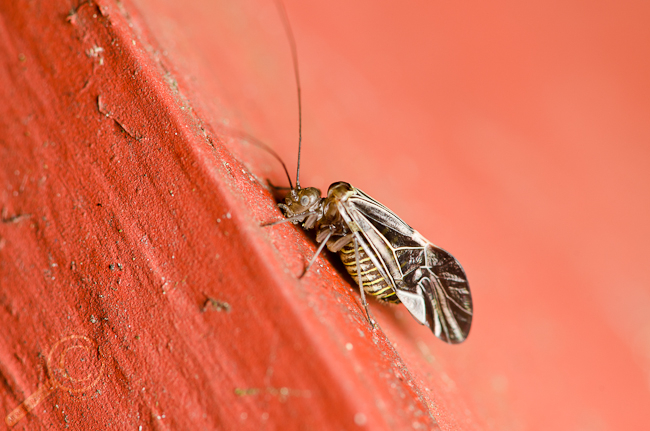
Tonight I’ll be looking for the trifecta of families – superfamily (2), family (5), and subfamily (5). I’ll post the points and the answers after I get back to Canada. Enjoy!

Share

Costa Rican Bug of the Day

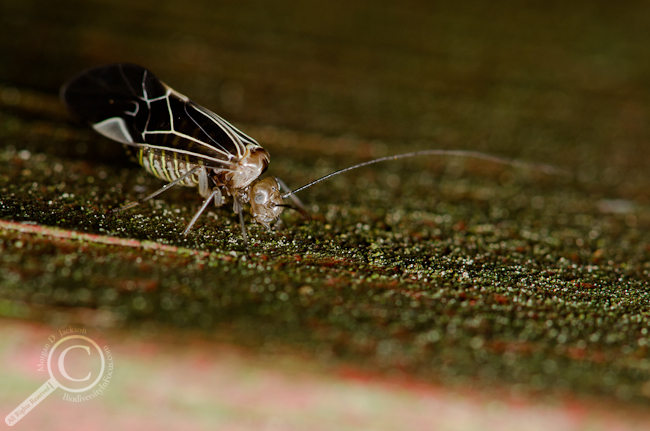
Tonight I’m looking for order (2), family (5), and subfamily (10). I’ll post the answers and scores next week when I get back to Canada. Good luck!

Share

Costa Rica Bug of the Day

Click to Enlarge

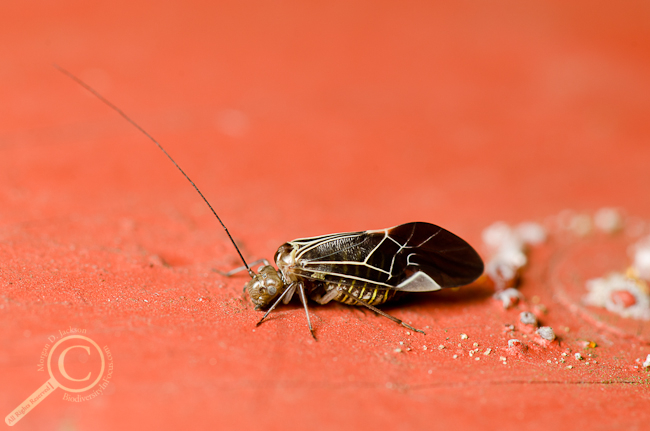
Tonight I’m looking for the ordinal scientific name (5), and the common name (2). There are bonus points available here, but because people have been doing so well I’m not giving any hints about how to get them. You’ll just have to give me more information and hope it’s what I’m looking for! I’ll award points and give the answers once I’m back in Canada next week. Have fun!

Share

Sorry there wasn’t a bug of the day yesterday, I ran out of steam and couldn’t get an image edited before I fell asleep! Here’s today’s:

ICD7 Logo

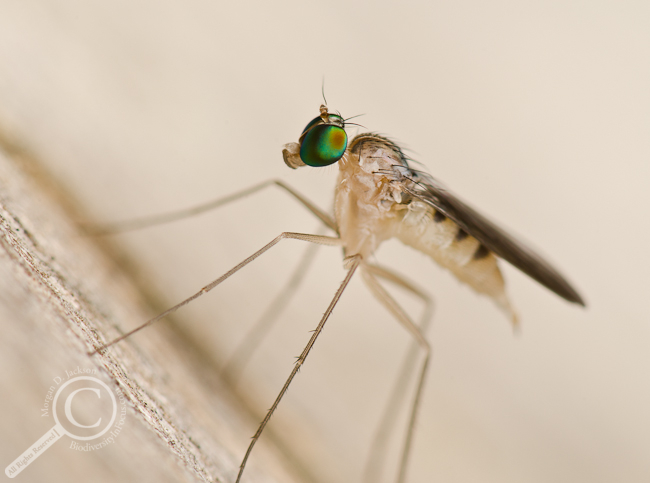
What’s this you say? A graphical representation of a fly? Well today I’m looking for one of the families that this fly could be based on the head morphology (I’m giving you a break since the wing veination isn’t really visible). I’ll give 5 points to each correct family name (scientific or common). Have fun, and spelling counts!

Share
BotDAug10
Click to Enlarge

Alright, we’re getting easier and easier here. 5 BioPoints for family name, 2 for family common name, 5 for subfamily name, and 2 more for subfamily common name! Answers and points will be awarded once I get back to Canada. Tune in tomorrow for something a little different!

Share

Bug of the Day Aug 9 Costa Rica

Click to Enlarge

Today’s bug of the day is a little easier I think, so I’ll give 5 BioPoints for the family name, 2 for the common family name, and I’ll put a total of 20 BioPoints up for grabs to anyone who can come up with a creative/evolutionary solution to why these insects look the way they do (these will be split between people if there are multiple good answers). Good luck, and I’ll award points and provide the answers in a week or so when I get back to Canada!

Share
© 2012 Biodiversity in Focus Blog Suffusion theme by Sayontan Sinha