May 272010
 

I took a short break this morning to clear my head and get back into this photography thing, so I headed over to the University of Guelph Arboretum and went looking for flies. It became readily apparent that not picking up a camera for 8 months was going to make it a learning process all over again! And the first lesson? Charge your flash batteries! One shot into the day and I realize my SB-800 is dead in the water. Crap… luckily my shooting buddy also uses Nikon equipment, so while he was shooting I was collecting, and vice versa. Problems solved right? Well, lesson 2 quickly became apparent; check your settings! I had switched to shooting JPEG this winter for a family function! Crap… a quick switch back to RAW format with hope those first few shots were ok and won’t need much editing (JPEG files don’t handle heavy editing well) and back to work I go.
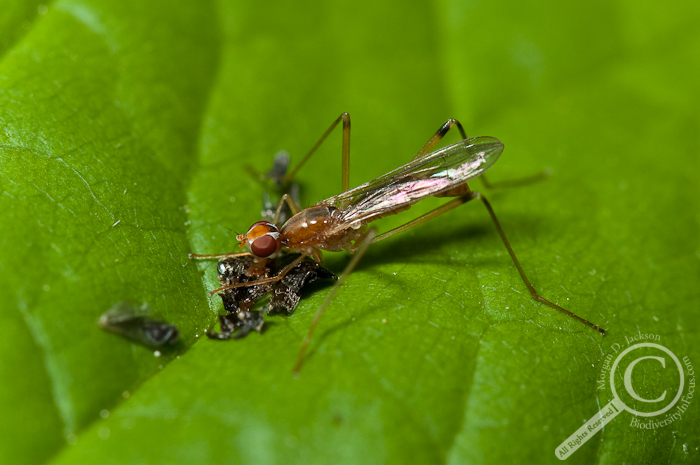
Compsobata univitta (Micropezidae) on green leaf

Well, at least something worked out! (Click to enlarge)

The rest of the morning was spent finding the body control and breathing necessary for macro work, and by lunch time I was feeling almost back into the swing of things! I definitely need to make the time to go out more regularly this summer, and remember, check, double check, and triple check your equipment each time you go out!
May 212010
 

Thought I’d pass along this golden egg, the Entomological Society of Canada has recently been given permission to scan and publish all 3 volumes of the Manual of Nearctic Diptera on their website, and it’s 100% free! The “Manual”, as it’s referred to, is as close to a Bible for North American dipterists as you can get, and includes keys to all* the genera of flies found north of Mexico! It’s been out of print for awhile now and bound copies are hard to come by (I just recently received a full like-new set this winter, and I’ve been searching for 4 years), which makes a digital (and searchable) version a real plus!

Here’s a quick breakdown of what’s in each richly illustrated volume:

Vol. 1 – Morphology and Terminology (great reference), Key to Families (adults and larvae), Keys to genera for all Nematocera (Culicidae – mosquitoes, Tipulidae – crane flies, Simuliidae – black flies, etc) and Orthorrhapha (Stratiomyidae – soldier flies, Tabanidae – deer and horse flies, Asilidae – robber flies, Bombyliidae – bee flies, Empididae – dance flies, etc)

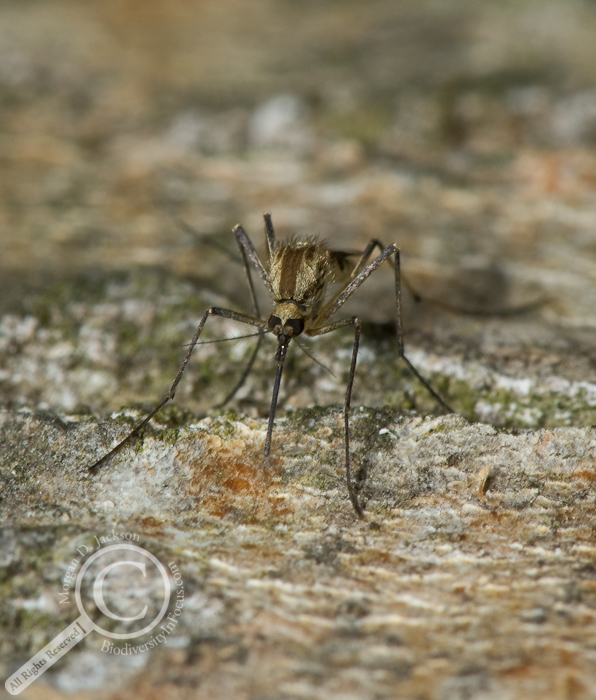
Mosquito sitting on log in Ontario

Time to start ID'ing my Nematocerans, like this Mosquito (Culicidae)

Vol. 2 – Keys to genera for each of the following; Aschiza (Syrphidae – flower flies, Phoridae – scuttle flies, Pipunculidae – big-headed flies, etc), Calyptratae (Muscidae – house flies, Calliphoridae – blowflies, Tachinidae, Sarcophagidae – flesh flies), and most importantly the Acalyptratae (Micropezidae – stilt-legged flies, Tephritidae – fruit flies, Drosophilidae – vinegar flies, Sphaeroceridae – lesser dung flies, Ephydridae – shore flies, etc)

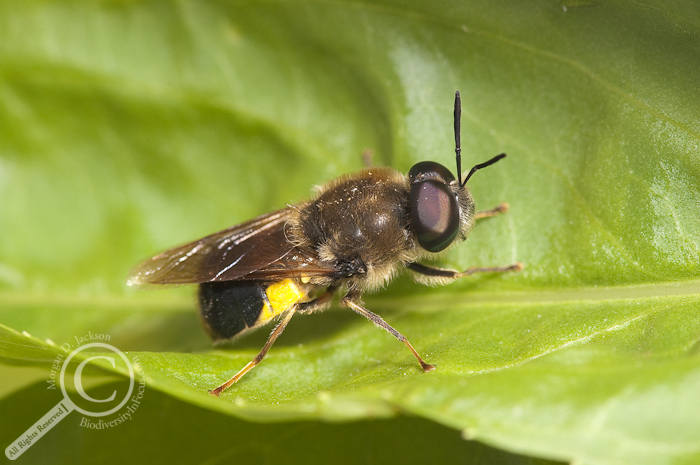
Soldier flies are your's to discover, like this <i>Stratiomys adelpha</i>

Soldier flies (Stratiomyidae) are your's to discover, like this Stratiomys adelpha

Vol. 3 – Phylogeny and classification of the Diptera

You can download your copy of the Manual here, and while you’re there check out some of the other titles that have been made available as well, including most of the Canadian Handbook Series, detailing some of the major insect and spider groups found in Canada! Thanks to the folks at Agriculture and Agri-Food Canada and the Canadian National Collection of Insects, Spiders, and Nematodes, and the Entomological Society of Canada for making this possible!

* – all genera as of the late 1980’s that is, there have been a few changes since then, but this will still give you a great headstart

Migration time!

 Nature, Photography  Comments Off on Migration time!
May 052010
 

Well, it’s the spring, and that means the birds start to come back to Ontario, and start showing off their finery!

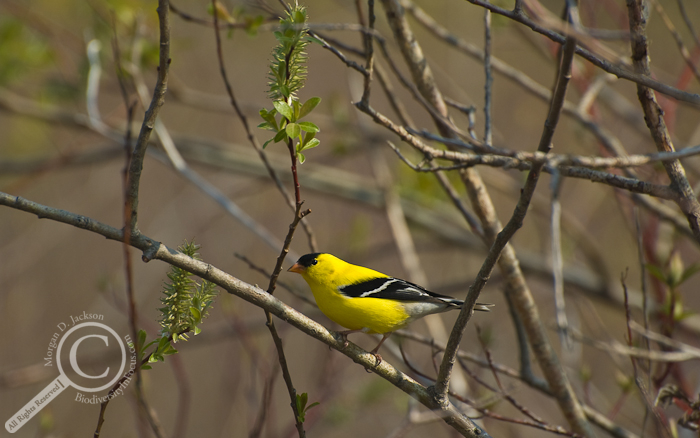
American Goldfinch at Long Point Provincial Park

Although not one of the major migrators in the area, this American Goldfinch (Spinus tristis) was exploring Long Point Provincial Park

Hopefully this season doesn’t go by as fast as the winter seemed to!